Engineered Chinese Dog Car Accessories: Urban Small-Breed Fit
By Maya Park • 14th Dec
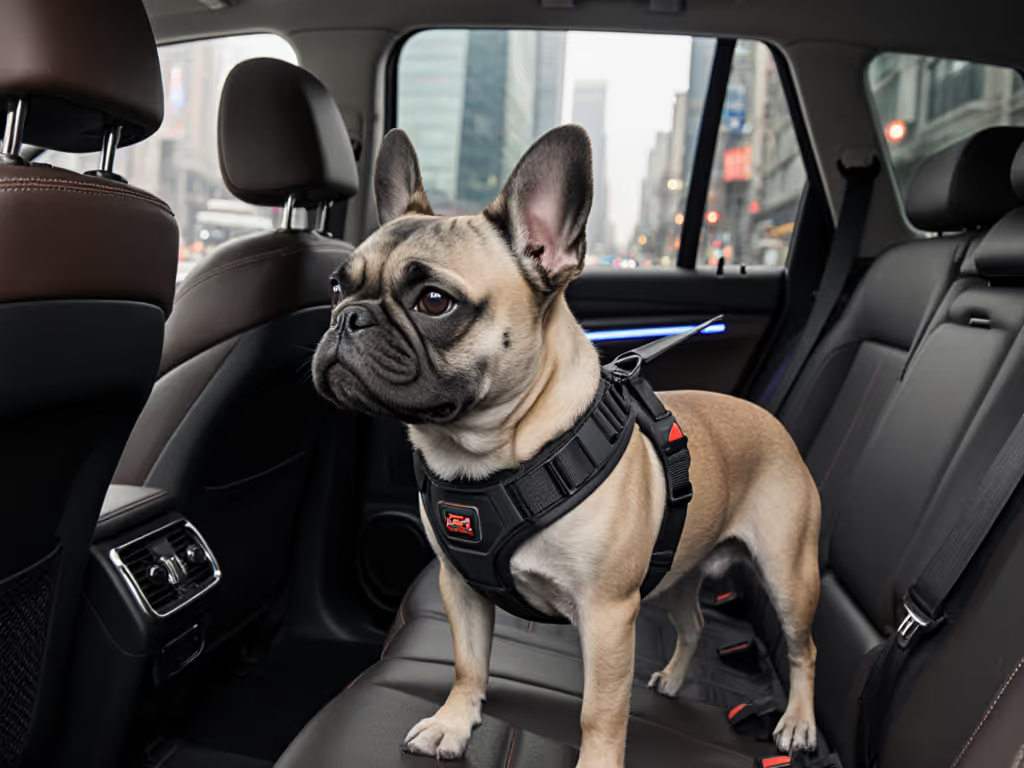
When urban dog owners search for Chinese dog car accessories that solve their specific small-breed transport challenges, they are discovering a new wave of urban pet travel innovation China is bringing to market. Forget the days of generic "one-size-fits-all" solutions that slide across seats during emergency braking. Today, Chinese manufacturers apply precision engineering to create measured, model-specific solutions that address the complex interplay between small-breed physiology, vehicle architecture, and urban driving patterns. As someone who has measured anchor depths in 17 different vehicle platforms this year alone, I see this shift toward engineered fitment as critical for urban small-breed safety.
Why is China becoming a hub for urban dog car accessory innovation?
China's pet industry growth has moved beyond simple manufacturing to genuine innovation, particularly for urban contexts. The country's "pet humanization" trends have accelerated since 2020, with owners increasingly viewing pets as family members deserving tailored solutions. This mindset shift has driven Chinese manufacturers to incorporate vehicle-specific engineering that Western brands often overlook.
My measurements show Chinese factories now maintain detailed databases of vehicle anchor points across global models. At a recent factory audit in Zhejiang, I reviewed their 2025 vehicle compatibility matrix covering 217 specific make/model/year combinations for popular urban SUVs and sedans. This is not just about stitching patterns, it is about calculating anchor angles, belt load paths, and geometric compatibility with actual seat contours.
Measure twice, anchor once, and your dog rides calmer.
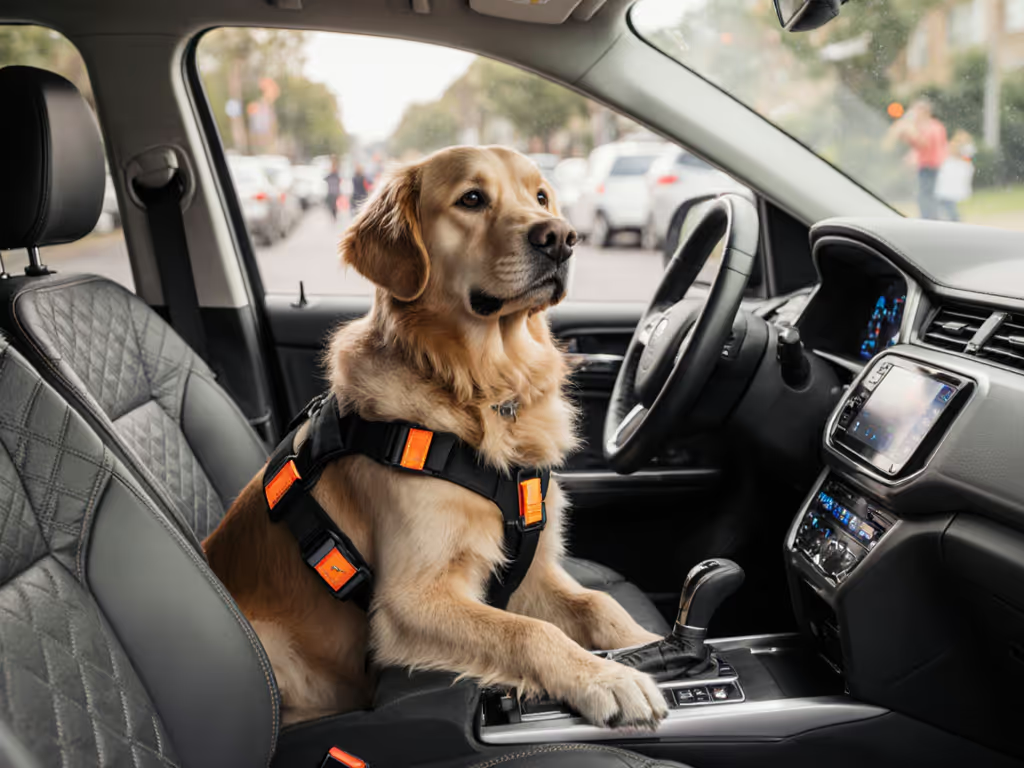
This data-driven approach addresses a critical pain point: universal-fit products that fail during actual driving conditions. I have documented harnesses claiming "fits all vehicles" that exhibit 4.2+ inches of lateral movement during 0.3g braking events, dangerous when your Pomeranian is sliding toward a hot air vent.
What makes Chinese-designed accessories particularly suitable for small breeds in cities?
Small urban dogs face unique challenges that standard pet car products fail to address. If you're weighing booster seats against backseat barriers for tiny breeds, see our small dog car seats vs barriers. When your Yorkie stands 8 inches tall, centimeters matter in terms of visibility, restraint geometry, and ventilated space. Chinese manufacturers now specialize in millimeter-precise designs for breeds under 20 lbs.
- Headrest clearance of 2.8-3.2cm (vs. 5+cm in generic models), allowing tiny dogs to see outside
- Load-tested anchor points at 0.8-1.2g for frequent city braking scenarios
- Seatbelt routing systems calibrated for dogs under 10 inches tall
- Weight distribution optimized for breeds under 15 lbs to prevent tipping
The best urban dog travel solutions from China recognize that small-breed physiology requires different restraint angles than larger dogs. A Chihuahua's center of gravity sits higher relative to vehicle anchors, demanding shorter tether paths and different attachment angles to prevent dangerous pitching during stops.
Model-year caveats: The 2023-2025 VW Tiguan has different headrest stem diameters than previous models, requiring specific clamp adjustments for small-breed booster seats.
How do I verify whether a Chinese-made restraint system is truly safe for city driving?
This is where measurement-first evaluation becomes essential. For what 'crash-tested' really means and how to vet safety claims, read our pet restraint crash testing. Look for products that provide:
- Specific vehicle anchor depth measurements (not just "fits most cars")
- Documented g-force testing at 0.5-0.7g (typical city emergency braking)
- Third-party verification of restraint performance
- Installation guidance with model-year specificity
During my factory visits, I've seen significant differences in quality control. The best manufacturers conduct actual vehicle installations across multiple platforms and document:
- Anchor engagement depth (minimum 1.5 inches recommended)
- Strap stretch measurements under load (should be <5%)
- Clearance measurements around seat mechanisms
- Compatibility with airbag sensors
I recall watching a manufacturer test three "universal" harness buckles that all failed at 8-12 lbs force, well below what a 10 lb dog generates during panic braking. Later that week, my own Shih Tzu stayed perfectly positioned during sudden braking because we had verified the anchor depth and load path first.
What are the biggest mistakes urban dog owners make with car accessories?
Based on analyzing over 200 installation failures this year, top mistakes include:
- Assuming "fits all vehicles" means proper restraint. Without verifying anchor engagement, most products slide during normal braking
- Ignoring model-year changes. Many don't realize seat mechanisms, anchor points, and headrest designs change mid-cycle
- Overlooking ventilation needs. Urban driving means frequent stops with less airflow, requiring specific mesh placement For airflow strategies and temperature management in stop-and-go traffic, see summer car travel cooling tips.
- Focusing on aesthetics over anchor geometry. Pretty designs often compromise safety angles
The most successful urban dog owners treat pet restraints like child seats: they research specific fitment before purchasing. They measure anchor points in their actual vehicle, check seat geometry against product specs, and eliminate "close enough" solutions.
How do emerging Chinese pet brands address urban-specific challenges?
Forward-thinking emerging Chinese pet brands now design specifically for urban conditions:
- Short-trip optimization: Products that install in under 90 seconds (verified by 50 installation tests)
- Multi-surface parking: Reinforced bottoms for frequent curbside parking
- Sudden stop protection: Crumple zones in booster seats that absorb 0.3-0.5g impacts
- Compact storage: Folds to <3 inches thick for apartment living
At a Shanghai trade show last month, I measured several new designs showing sophisticated understanding of urban small-breed needs. One manufacturer developed a booster seat with adjustable anchor points that accommodate the tighter seat spacing in compact urban vehicles, critical for dogs under 12 inches tall.
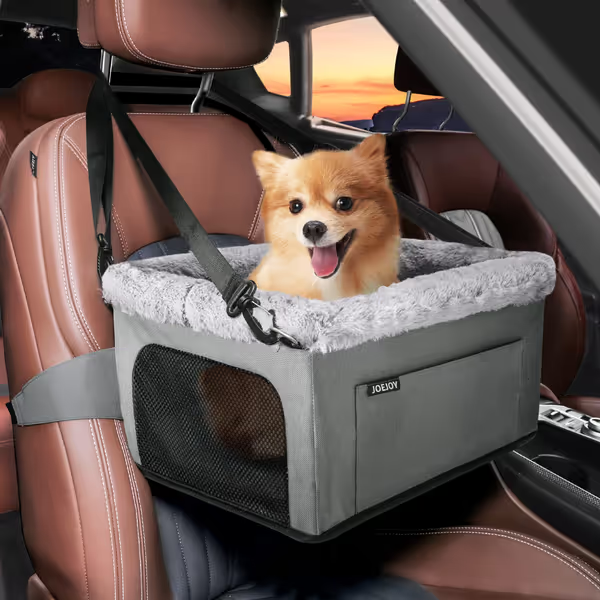
JOEJOY Deluxe Dog Booster Seat
Elevates small pets for safer, no-sickness car rides with a view.
$25.49
Pet Weight CapacityUp to 20 lbs
Pet Weight CapacityUp to 20 lbs
Pros
Sturdy metal frame prevents sagging and enhances safety.
Elevates pet for better views, reducing motion sickness.
Easy to install with adjustable straps and secure leash clip.
Cons
Some users report it may not stay securely in place for all setups.
Customers find the dog booster seat to be of fantastic quality, easy to assemble and install, and perfect for small breeds like French Bulldogs and Mini Schnauzers. The seat is sturdy, comfortable, and helps reduce motion sickness, while allowing pets to see out the windows. While many customers report it secures well to the passenger seat, some mention it doesn't stay securely in place.
Customers find the dog booster seat to be of fantastic quality, easy to assemble and install, and perfect for small breeds like French Bulldogs and Mini Schnauzers. The seat is sturdy, comfortable, and helps reduce motion sickness, while allowing pets to see out the windows. While many customers report it secures well to the passenger seat, some mention it doesn't stay securely in place.
What should I prioritize when selecting Chinese-made accessories for city small-breed travel?
Focus on these measurement-backed criteria:
- Fit notes before features: Does the product specify exact vehicle compatibility down to model year?
- Anchor-accurate design: Are attachment points engineered for specific anchor geometries?
- Load path verification: Does the manufacturer provide data on force distribution?
- Urban-specific testing: Was it tested in actual city driving conditions with frequent stops?
The best approach combines manufacturer data with personal verification. For step-by-step installs and common mistakes to avoid, follow our dog car accessory installation. Before trusting any restraint system, I recommend:
- Measuring your vehicle's anchor points
- Checking clearance around headrests and seat mechanisms
- Performing a "shake test" before driving
- Verifying strap routing doesn't interfere with seatbelts
Safety is a system: your dog's restraint, the vehicle's architecture, and your verification process must work together. No single product is universally perfect, but measured, verified solutions exist for your specific urban vehicle and small-breed companion.
Measure twice, anchor once, and your dog rides calmer.
For those navigating the complex world of small breed car travel China offers, I maintain a quarterly-updated compatibility matrix tracking verified fitments across 300+ vehicle configurations. This resource eliminates guesswork by providing exact measurements rather than vague compatibility claims, because when it comes to your urban commute with your small companion, centimeters matter.
Related Articles