Canine Vestibular System: Motion Sickness Explained
By Luis Andrade • 31st Mar
When a dog vomits during a car ride, most owners assume it's just nervousness, but the physiology is more precise. Understanding canine motion sickness physiology and the role of the dog vestibular system in car travel reveals why some dogs outgrow nausea while others don't, and how you can design safer, calmer transport solutions.
I've spent years measuring seat geometry and cargo clearance for dogs, and I learned early that motion-related stress compounds when a dog's inner ear is misfiring signals to the brain. The science informs the setup; the setup determines whether your dog rides in panic or peace.
FAQ: How the Vestibular System Works
What exactly is the vestibular system, and why does it matter for car travel?
The vestibular system is your dog's balance and spatial-awareness command center, a specialized structure deep inside the inner ear that detects motion, acceleration, and orientation in space[1][2]. It consists of three semicircular canals (which interpret rotational movement) and otolithic organs (which interpret linear acceleration, like forward, backward, and sideways motion)[1]. Together, these sensors feed real-time data to your dog's brain about where the body is and how it's moving relative to the environment[2].
In a car, your dog experiences acceleration in multiple directions simultaneously (braking, turning, lane changes), exactly the kind of conflicting, inconsistent motion that overstimulates the inner ear apparatus[2]. When the brain receives confusing signals from the vestibular system, it triggers nausea and vomiting as a protective reflex[2][3].
Here's the practical angle: if your dog is sliding, shifting, or bracing during turns, the vestibular system works harder to maintain balance. For a deeper dive into practical fixes, see our dog car sickness prevention guide. A dog that's secure, stable, and centered in the cargo area has less sensory noise to filter.
At what age do puppies develop vestibular function, and can dogs outgrow motion sickness?
The vestibular system does not fully mature until around 6 months of age[1]. A puppy taken on car trips before that developmental window may experience motion sickness not because of a structural problem, but because the system simply isn't ready to handle the input[1].
Here's the encouraging part: as the vestibular and peripheral nervous systems complete development, some dogs will outgrow motion sickness entirely[1]. However, this is not universal. In other cases, even after the biology normalizes, fearful behavioral imprints psychosomatically cause the symptoms to endure[1]. The dog's brain has learned to associate the car with nausea, and that association persists.
There's also a third scenario: if a dog's vestibular system is improperly developed due to congenital defects, disease, or trauma, the dog may permanently struggle with balance, spatial orientation, and the ability to accept automobile travel[1]. This is where secure, minimal-motion restraint becomes therapeutic because it reduces the vestibular load so the dog can focus on breathing and staying calm.
What's the difference between motion sickness and vestibular syndrome?
Motion sickness and vestibular disorder in dogs (vestibular syndrome) are related but distinct[3][4][5].
Motion sickness is a transient response to conflicting sensory input during motion[2]. A healthy dog experiences it, vomits or feels nauseous, the motion stops, and the dog recovers. The physiological pathway runs from the inner ear through the chemoreceptor trigger zone and vomiting center in the brain stem[3].
Vestibular syndrome (also called vestibular disease) is a sudden, often severe dysfunction of the balance system itself, not just a response to motion[4][5]. Dogs with vestibular syndrome present with sudden loss of balance, disorientation, head tilt, rapid eye movements (nystagmus), and general wobbliness[4][5]. They may fall to one side, roll, or struggle to stand[4].
The most common form in older dogs is idiopathic vestibular disease (old dog vestibular disease), which is the most benign form and often resolves on its own in senior dogs within days[4][7]. However, vestibular syndrome can also stem from ear infections, hypothyroidism, tick-borne diseases, medication toxicity, stroke, or brain tumors[4][5][7].
For car travel planning: if your dog experiences mild nausea in the car but otherwise has normal balance and coordination, you're likely dealing with motion sickness. If your dog is stumbling, head-tilting, or exhibiting rapid eye movements even when stationary, consult your veterinarian before travel.
How does the brain actually trigger nausea when the vestibular system is overstimulated?
When motion creates conflicting signals, the vestibular apparatus in the inner ear sends impulses through a specialized neural pathway to a region called the chemoreceptor trigger zone (CRTZ)[2][3]. This zone acts as a gateway to the vomiting center in the medulla oblongata, the brainstem area that coordinates the physical act of vomiting[2][3].
Recent research reveals that neurokinin 1 substance P receptors (NK1) in the emetic center play a major role in motion sickness in both dogs and cats, and are more important than the receptors in the CRTZ itself[3]. When these receptors fire repeatedly due to vestibular overstimulation, the result is the nausea-and-vomit reflex[3].
One additional pathway involves the vagus nerve, which connects the gastrointestinal system to the brain[1]. If a dog is anxious about car travel, that emotional state activates the gut-brain axis, compounding the vestibular signal and making nausea worse[1].
This matters because it explains why a stressed dog in a wobbly, unsecured setup gets sicker than a calm dog in a stable one. Anxiety + vestibular stimulus = amplified nausea. Reduce the motion, reduce the anxiety, and you reduce the vomiting.
Can you explain why some car motions are worse than others?
The vestibular system is exquisitely sensitive to acceleration in certain directions. Motion sickness occurs most readily with acceleration perpendicular to the longitudinal axis of the body (sideways and front-to-back forces, like braking, turning, or lane-changing)[2]. This explains why head movements opposite the body's direction of travel are so stimulating: the inner ear detects maximum conflicting signal[2].
A smooth, straight highway at constant speed triggers far less vestibular input than city driving with frequent stops, turns, and speed changes. An unsecured dog shifting sideways during a left turn experiences double jeopardy: the physical acceleration plus the need to brace and rebalance, both of which activate the inner ear.
Design implication: the more stable and centered your dog sits, the less the vestibular system has to compensate. Rattle check: if your restraint system or crate allows side-to-side movement, your dog is working harder to stay upright, and the inner ear is being hammered.
FAQ: Motion Sickness Prevention and Management
Is there medication for canine motion sickness?
Yes. Medications like scopolamine (a muscarinic antagonist used in humans) can interrupt the signaling pathway between the vestibular apparatus and the vomiting center[1]. However, scopolamine is not commonly used in dogs; your veterinarian may prescribe alternatives that block H1-histamine or NK1 receptors, both of which are involved in the motion-sickness cascade[3].
But medication is not a first-line solution for every trip, especially shorter ones. Behavioral and environmental adjustments (secure positioning, minimal sliding, reduced anxiety) often prevent nausea before it starts.
What can owners do right now to reduce motion sickness?
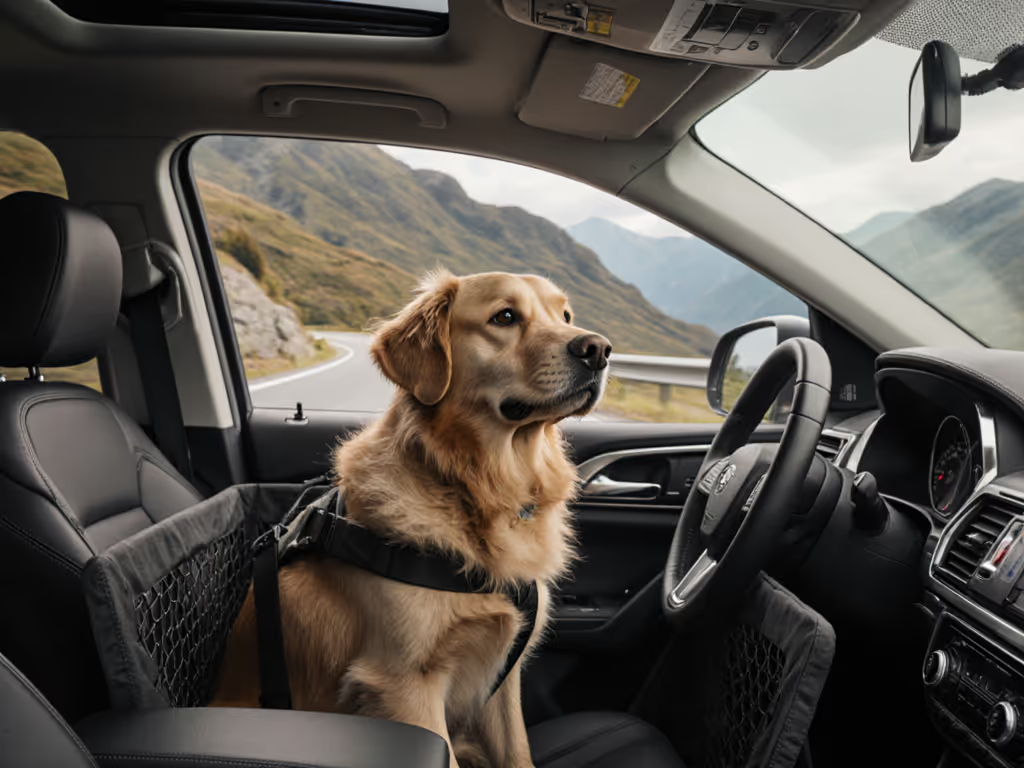
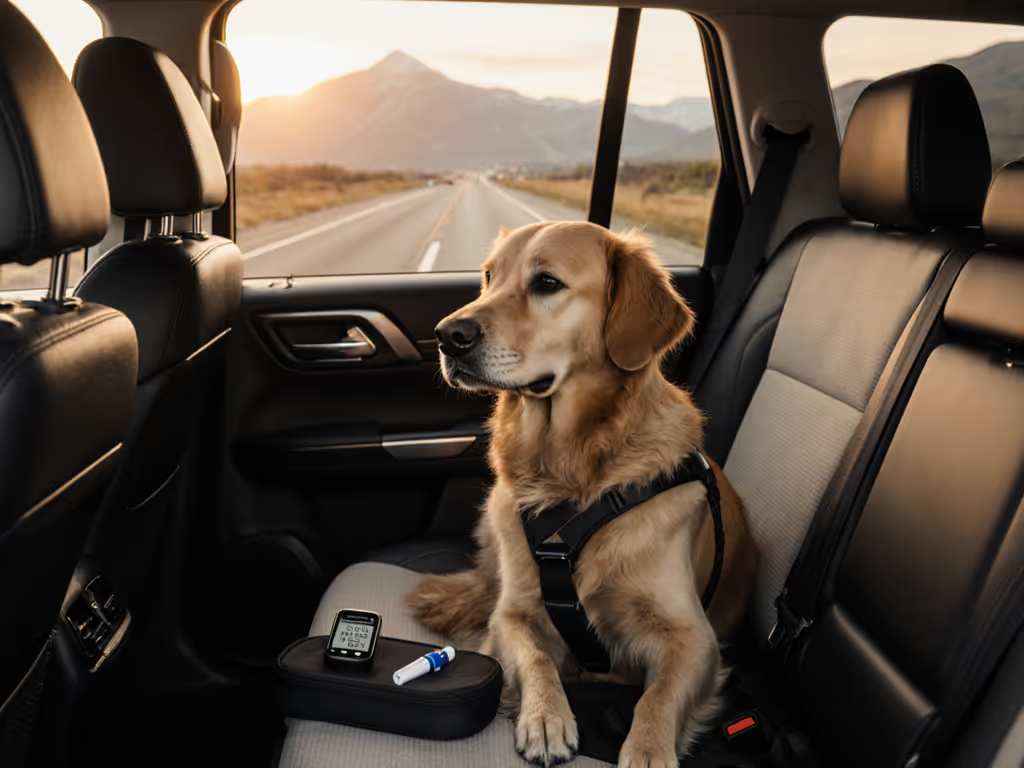
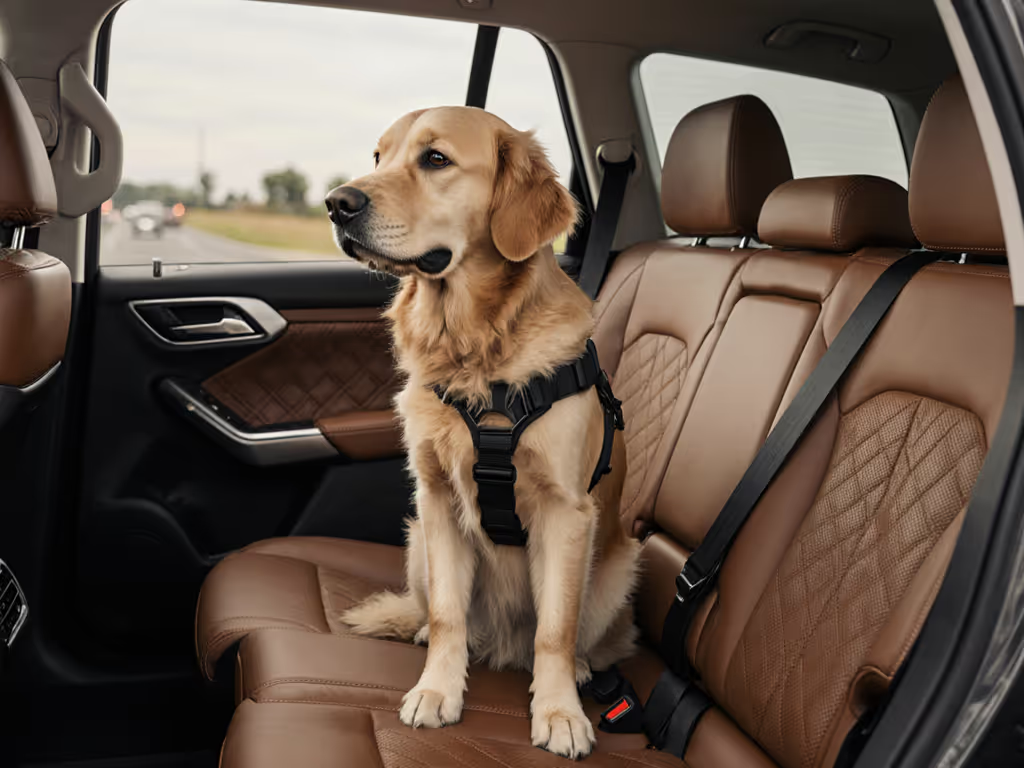
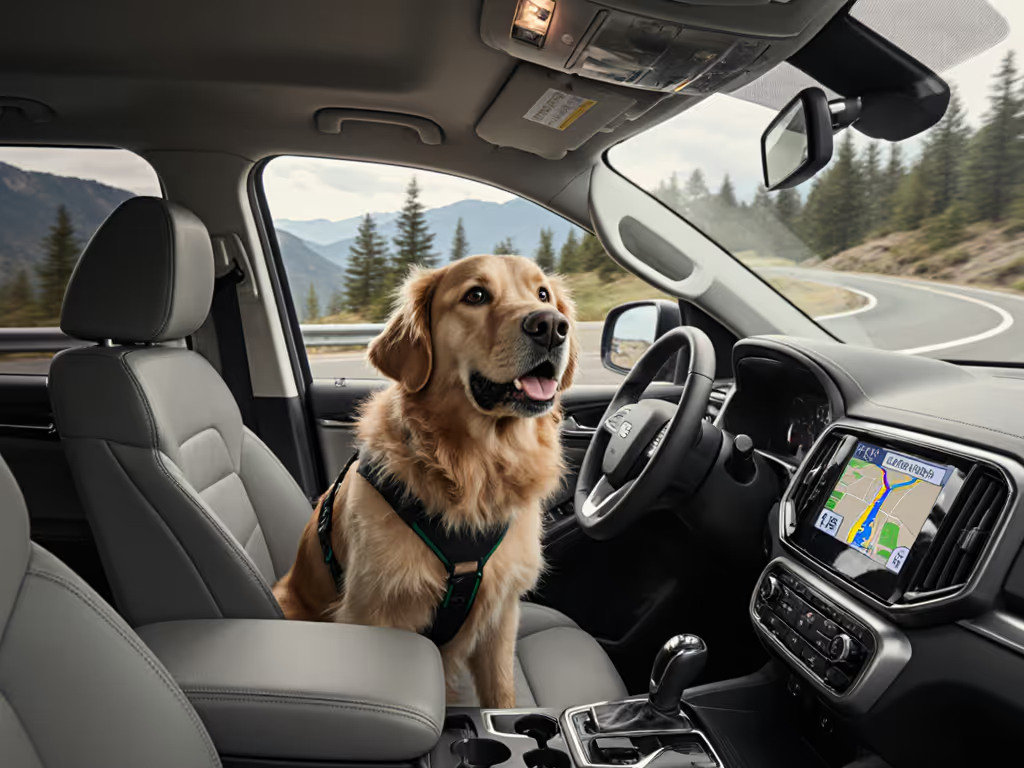
Secure, minimal-motion restraint is the foundation. A dog that cannot slide, brace, or shift during acceleration experiences far less vestibular stimulus. If your dog is free-roaming in the cargo area, every stop and turn forces the inner ear to compensate. Containment (whether a well-fitted crash-tested harness anchored to a LATCH point or a crate secured to cargo tie-downs) eliminates that variable.
Second, reduce sensory overload. Avoid peak sun heating (overheating increases nausea), keep the cabin well-ventilated, minimize sudden acceleration, and take smooth, predictable routes when possible. Some dogs benefit from a window view; others do better with privacy (cargo barriers reduce visual stimulus).
Third, short, positive trips build tolerance. For step-by-step desensitization and reward setups, see our positive car associations guide. If your dog associates the car with nausea, a single anxious experience can create a lasting behavioral imprint[1]. Introduce car travel gradually: sit in the parked car, take 5-minute drives, reward calm behavior. Over time, the behavioral fear can dissipate, even if the initial vestibular sensitivity was real.
Fourth, timing and feeding matter. Travel on an empty stomach, or wait a few hours after a meal. A full belly plus motion equals higher nausea risk.
Actionable Next Steps
Understanding the physiology of car-travel nausea and canine inner ear function is the first step; translating that knowledge into a calm, secure car setup is the next.
Start here:
-
Measure your dog's dimensions and your vehicle's cargo/seat geometry. Know the exact headrest post taper, cargo-floor width, hatch slope, and anchor-point locations. Universal setups fail because vestibular-sensitive dogs need precision. A millimeter of difference in post diameter can mean the difference between a silent lock and an annoying rattle that compounds anxiety.
-
Invest in secure restraint that anchors to real anchor points (LATCH, ISOFIX, or cargo tie-downs), not to grab handles or seatbelts alone. Your dog needs zero side-to-side play during turns. For mounting tips and torque checks, follow our accessory installation guide.
-
Test your setup on a short, smooth route before longer trips. Observe whether your dog is bracing, shifting weight, or visibly stressed. If the restraint moves, adjust tension and spacing.
-
Consult your veterinarian if nausea persists despite a secure setup. That may indicate underlying vestibular dysfunction or anxiety that warrants medical evaluation.
-
Build positive associations with short, reward-based trips. A dog whose nervous system is calm has a lower threshold for motion-induced nausea.
Clean installs aren't magic: they are measurements, proper order of operations, and checked torque. The same principle applies to motion-sickness prevention: it's not one magic fix, but a sequence of smart choices. Secure the dog, stabilize the setup, reduce the anxiety, and the vestibular system can do its job without revolt. Your calm, confident dog in the cargo area is proof the science works.
Related Articles