Canine Dehydration in Car Travel: Early Signs & Hydration Science
By Luis Andrade • 29th May
When you start digging into canine dehydration car travel data, one thing becomes clear fast: most problems are preventable if you treat water like you treat restraints: planned, measured, and checked. In this FAQ deep dive, we'll translate dog hydration science during travel into concrete numbers, in-car routines, and quick tests you can run at rest stops without turning every ride into a science experiment.
If it rattles, we refit until it doesn't.
I apply the same rule to hydration setups in vehicles that I do to barriers and crates: secure, predictable, and easy to monitor while you drive.
--
Why are dogs at higher risk of dehydration in cars?
Q: What makes the car environment different from home for hydration?
A moving vehicle stacks several stressors that all pull water out of your dog:
- Heat load and ventilation quirks. Even on mild days, sun through glass plus dark interiors raises ambient and surface temperatures, which increases panting and fluid loss.
- Limited voluntary access to water. At home, dogs can walk to a bowl whenever they want; in a crate, harness, or cargo area, they drink only when you offer or when a travel bowl is within reach and stable.
- Stress and motion sickness. Anxiety and motion sickness increase drooling and sometimes vomiting, both accelerate fluid and electrolyte loss.
- Owners often restrict intake. Many people (correctly) reduce food before a drive but mistakenly restrict water as well, even though travel guidelines advise keeping water available throughout the trip.
Layer those on top of summer heat or a long highway stretch, and your dog's hydration margin shrinks faster than it would at home. Learn practical ways to cut cabin heat and radiant load in our dog car cooling comparison.
--
How much water does my dog really need on a travel day?
Q: What's the baseline daily water requirement?
Under normal conditions, most dogs need roughly 1/2 to 1 ounce of water per pound of body weight per day. That means:
- A 10 lb dog: ~5-10 oz/day (about 2/3 to 1 1/4 cups)
- A 50 lb dog: ~25-50 oz/day (about 3 to 6 cups)
Veterinary resources converge on this range as a practical baseline for healthy adult dogs.
Q: How do I adjust that for car travel?
Travel adds heat, stress, and limited access, so aim for at least the normal daily requirement, and plan capacity for modestly more, especially in warm weather or with active dogs. In practice:
- Pre-measure your dog's daily minimum into a dedicated travel bottle or jug.
- Pack a second container of equal size if temperatures or exertion will be high.
That way your install is quantified: you know the minimum on board, not just that there's some water in the car. For spill-proof, road-tested options, see our car-safe dog hydration systems.
--
What are the earliest signs of dehydration during car rides?
Q: What subtle changes should I watch for before things get serious?
Early signs of dehydration during car rides are mostly small changes in soft tissues and behavior:
- Dry or tacky gums instead of moist, slick gums
- Thick, ropey saliva rather than thin drool
- Skin that tents and doesn't snap back quickly when gently lifted
- Lethargy or weakness: dog lies down and doesn't want to move
- Excessive panting or bright red gums/tongue (can also indicate heat stress)
- Sunken eyes and reduced interest in water or surroundings
Q: How do I run the quick dehydration checks safely?
Only do physical checks when the vehicle is stopped and secure:
- Skin tent test. Gently pinch a small fold of skin between the shoulder blades, lift an inch, and let go. In a hydrated dog, skin springs back quickly; in a dehydrated dog, it returns more slowly or stays slightly tented.
- Gum moisture and refill test. Lift the lip, touch the gum above the teeth. If it feels dry or tacky, dehydration is possible. Press a fingertip on the gum until it blanches, then release; the spot should turn pink again almost immediately. Delayed color return can indicate dehydration or circulatory compromise.
If you see multiple signs together, or any sign plus vomiting, diarrhea, or collapse, treat that as a red flag and contact a veterinarian promptly.
--
How do heat and AC settings affect hydration in the car?
Q: If the AC is on, is dehydration still a concern?
Yes. Cooling helps, but does not eliminate risk:
- Dogs cool primarily through panting, and panting increases water loss regardless of cabin temperature.
- AC often dries the air, which can further increase respiratory water loss during prolonged rides.
The bigger non-negotiable: never leave a dog in a parked car with the AC off, even briefly. Veterinary guidance is clear that enclosed cars heat rapidly and can become dangerous even on apparently mild days. Get seasonal setup tips for hot-weather rides in our summer car travel guide.
Practical setup tips:
- Aim vents so cool air reaches the dog's breathing zone without blasting their eyes.
- In SUVs/crossovers, verify that rear vents actually push air to the cargo zone; if not, crack rear windows slightly while maintaining overall climate control.
- Use sunshades to cut radiant heat on the side where your dog rides.
You're managing both temperature and panting rate; lower panting generally means slower water loss.
--
What does electrolyte balance for traveling dogs really mean?
Q: What are electrolytes and why do they matter in the car?
Electrolytes (mainly sodium, chloride, and potassium) help regulate fluid balance, nerve function, and muscle contraction. Vomiting, diarrhea, and significant dehydration can disturb this balance.
According to travel hydration guidance, dehydration is not just about volume, electrolyte loss is a parallel issue, which is why some vets approve pet-formulated electrolyte solutions in certain cases.
Q: Should I give my dog electrolyte drinks on every trip?
For a healthy dog on routine car rides, plain fresh water is usually sufficient. Electrolyte aids enter the picture when:
- A vet has specifically recommended an electrolyte solution for your dog.
- There has been mild vomiting or diarrhea, and your vet approves an oral rehydration solution.
Some veterinary sources suggest that, if cleared by your vet, you can dilute things like unsweetened coconut water 50:50 with water to encourage drinking and add mild electrolytes. Avoid human sports drinks unless your veterinarian explicitly okays them; they may contain too much sugar or other additives for many dogs.
--
How often should I offer water and breaks on car trips?
Q: What's a realistic water and break schedule?
Travel resources agree on a simple pattern: don't restrict water just because you're traveling. Practical schedule for most healthy adult dogs:
- Short trips (<1 hour): Offer water before and after; no need for mid-trip access unless it's very hot.
- Moderate trips (1-4 hours): Offer water every 60-90 minutes during short stops; more frequently in hot weather or with heavy panting.
- Long trips (>4 hours): Treat like a series of 2-3 hour segments; at each stop, offer water, shade, and a chance to urinate.
One key guideline: even if you skip food for 4-6 hours pre-trip to reduce motion sickness, you should not apply the same restriction to water. Travel recommendations emphasize continuous access to fresh water through the trip.
Car travel hydration monitoring tip:
Use a marked bottle (e.g., 50 oz for a 50 lb dog's baseline) and note the level at each stop. It's the hydration equivalent of a torque wrench: you're reading numbers, not guessing.
--
How can I monitor hydration in a moving vehicle without distracting from driving?
Q: What's the safest way to keep tabs on hydration while still driving responsibly?
Sequence matters:
- Before departure:
- Check your dog's gums and skin when you know they're well hydrated at home.
- This sets a baseline sensation in your fingers.
- During fuel/bathroom stops:
- Offer water in the shade; note how eagerly your dog drinks.
- Run a quick gum-moisture check and, if needed, a skin tent test while parked.
- Passive in-cabin monitoring:
- Watch for escalation: normal panting -> heavy panting with bright red gums or tongue -> lethargy or disorientation.
- A front passenger can observe more directly; solo drivers should avoid twisting around and instead rely on planned stops.
- Log patterns:
- A simple note on your phone, time, how much water offered, and how much was actually drunk, turns guesswork into data. If you prefer automation, compare road-tested pet travel apps that add temperature alerts and trip logging.
Install time: treat this like installing a barrier (there's an order of operations). Baseline at home, then checkpoint at each stop.
--
Are car water setups safe, or do they just make a mess?
Q: Are spill-proof bowls and crate buckets worth it?
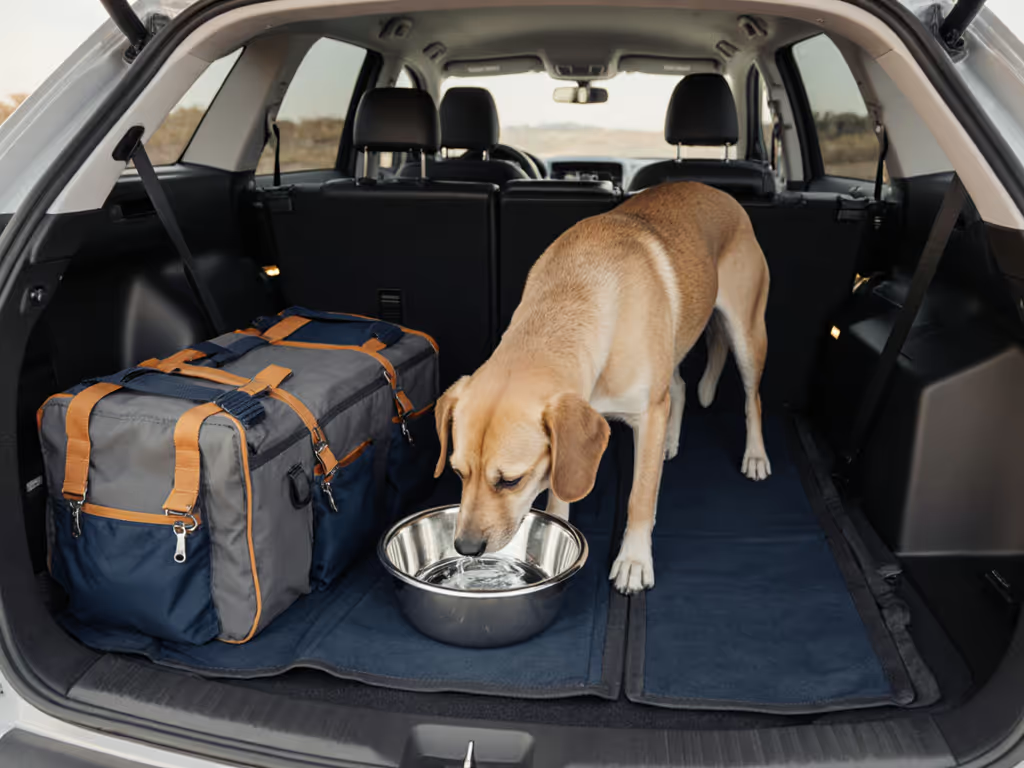
On the road, dog water needs in vehicles are a mix of volume and stability. Travel guidance suggests using oversized bowls or water buckets attached to crate doors so dogs can drink without the container sliding around. Freezing water in the bowl before travel can reduce spilling and provide a steady source of cool water as it melts.
To keep things safe and quiet:
- Secure the hardware. Attach bowls to crate doors or cargo tie-downs so they cannot tip or slide during braking.
- Right-size the depth. Shallow, wide bowls reduce slosh while staying accessible to short- and long-nosed breeds.
- Start half-full. Especially if you haven't dialed in the setup yet, run with less water and top up at each stop.
From a noise-sensitive standpoint, any clanking or tapping you hear from the bowl or bracket is wasted energy, and a distraction. The same principle I use with headrest-mounted barriers applies here: if it rattles, we refit until it doesn't.
--
When are electrolytes or vet care non-negotiable?
Q: How do I know if this is more than a little dry and needs a vet now?
Seek immediate veterinary care (ideally at the nearest clinic or emergency hospital) if your dog shows:
- Repeated vomiting or diarrhea
- Weakness, collapse, or inability to stand
- Extreme panting or drooling that does not improve with cooling
- Confusion, disorientation, or unresponsiveness
- Refusal to drink combined with lethargy
Veterinary sources emphasize contacting your vet as soon as you suspect dehydration for guidance. For mild cases, your vet may recommend:
- Moving the dog to a cool, shaded or air-conditioned space
- Offering small, frequent sips of fresh water
- Using a pet-specific electrolyte solution if they have previously approved one for your dog
Moderate to severe dehydration generally requires IV or subcutaneous fluids at a clinic, not DIY fixes in a car.
--
Does motion sickness change hydration strategy?
Q: My dog gets car-sick. How do I keep them hydrated without making nausea worse?
Motion sickness often causes drooling, nausea, and vomiting, which can quickly move a dog toward dehydration. Travel and veterinary guidance together suggest this approach:
- Food: Avoid large meals for 4-6 hours before travel to reduce vomiting risk.
- Water: Do not withhold water entirely; instead, offer small, frequent sips so the stomach isn't full of water right before the car moves.
- Positioning: Many motion-sick dogs do better facing forward in a secured crate or harness and with good airflow.
- Medical support: In persistent cases, veterinarians can prescribe anti-nausea medications to use before travel.
Hydration and nausea are a balance problem: you're trading big, risky gulps for controlled, repeated sips. For step-by-step prevention strategies, see our dog car sickness guide.
--
What's my actionable hydration checklist before the next drive?
Q: How do I turn all this into a simple, repeatable routine?
Here's a sequence-driven checklist you can run for every significant trip:
24 hours before travel
- Confirm your dog is drinking normally at home.
- Run a quick gum and skin-tent baseline check while they are definitely well hydrated.
2 hours before departure
- If motion sickness is a concern, stop food (per your vet's guidance) but continue normal water access.
- Pre-measure at least your dog's baseline daily water need into a travel jug, plus extra for heat.
At departure
- Verify crate, barrier, or harness is solid and that the water setup (if in-cabin) is secured with no metal-on-metal rattle.
- Set climate control so cool air reliably reaches the dog's zone.
During the drive
- Stop every 60-90 minutes on moderate or longer trips to offer water and shade.
- At each stop, log roughly how much water was offered and consumed.
- Do a fast visual scan for early dehydration signs: gum moisture, panting intensity, and overall energy level.
On arrival
- Offer water again and monitor for any vomiting, diarrhea, or unusual fatigue in the next few hours.
- If something feels off and simple rehydration doesn't quickly improve things, call your vet and describe the trip, signs, and approximate water intake.
Treat hydration management the way you treat your restraint setup: specific, repeatable, and grounded in numbers. That's how you turn car travel hydration monitoring from a worry into a quiet background routine your dog, and your cabin, can rely on.
Related Articles