5 Pickup Truck Dog Barriers That Actually Work
By Owen McAllister • 12th Apr
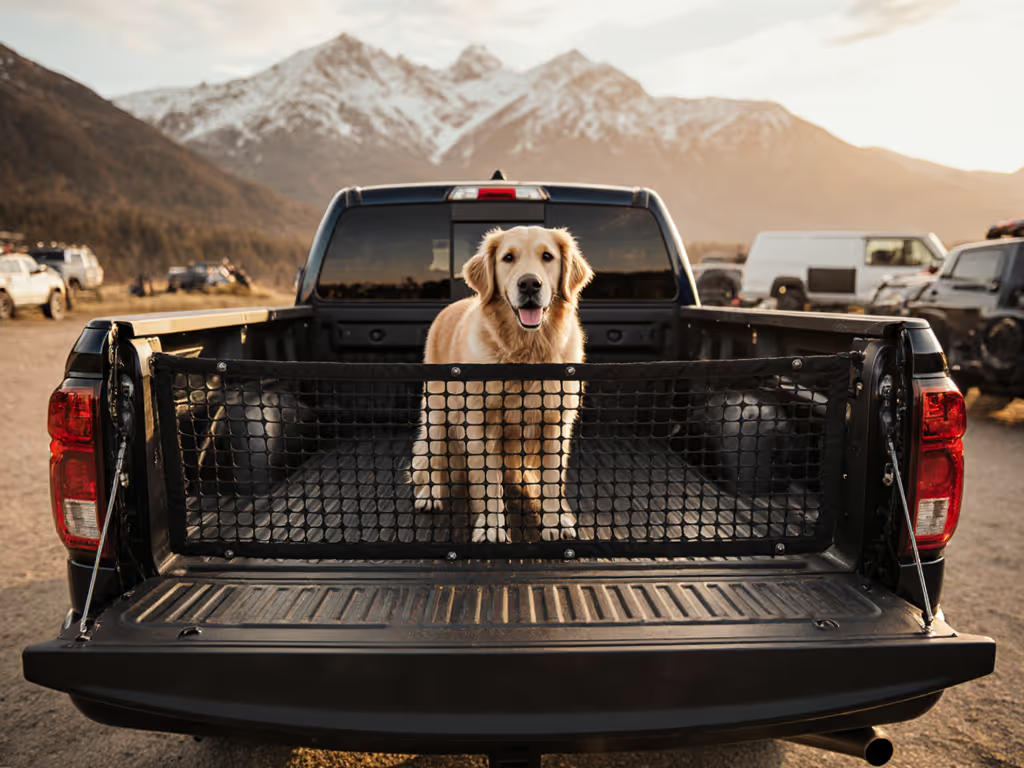
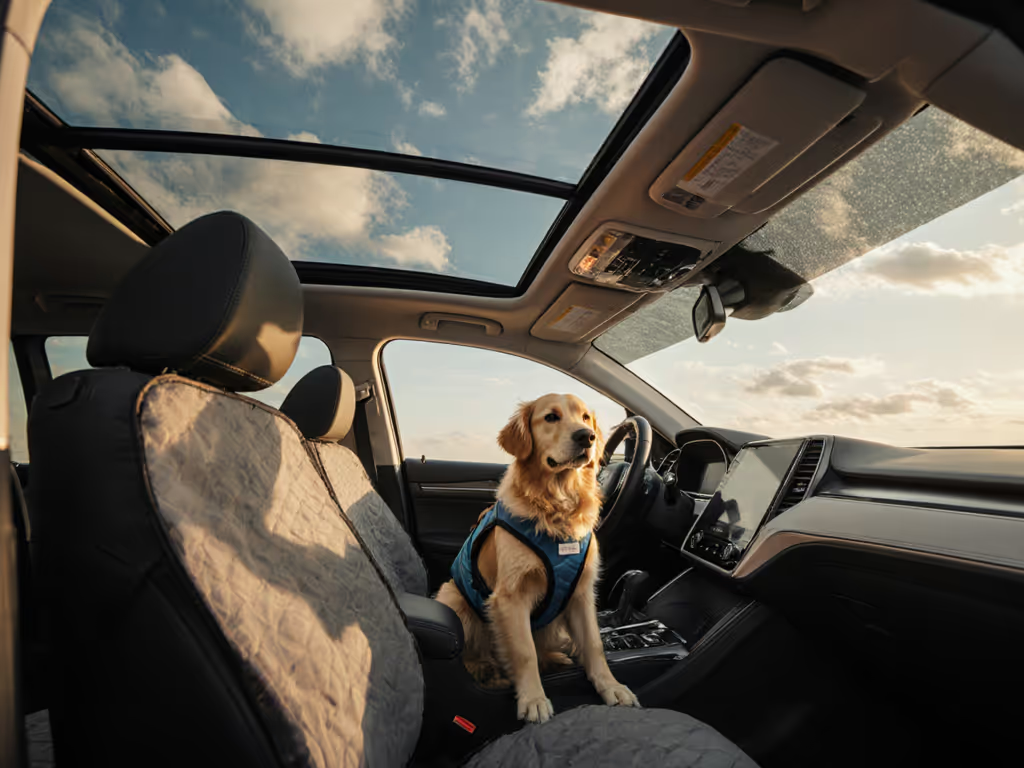
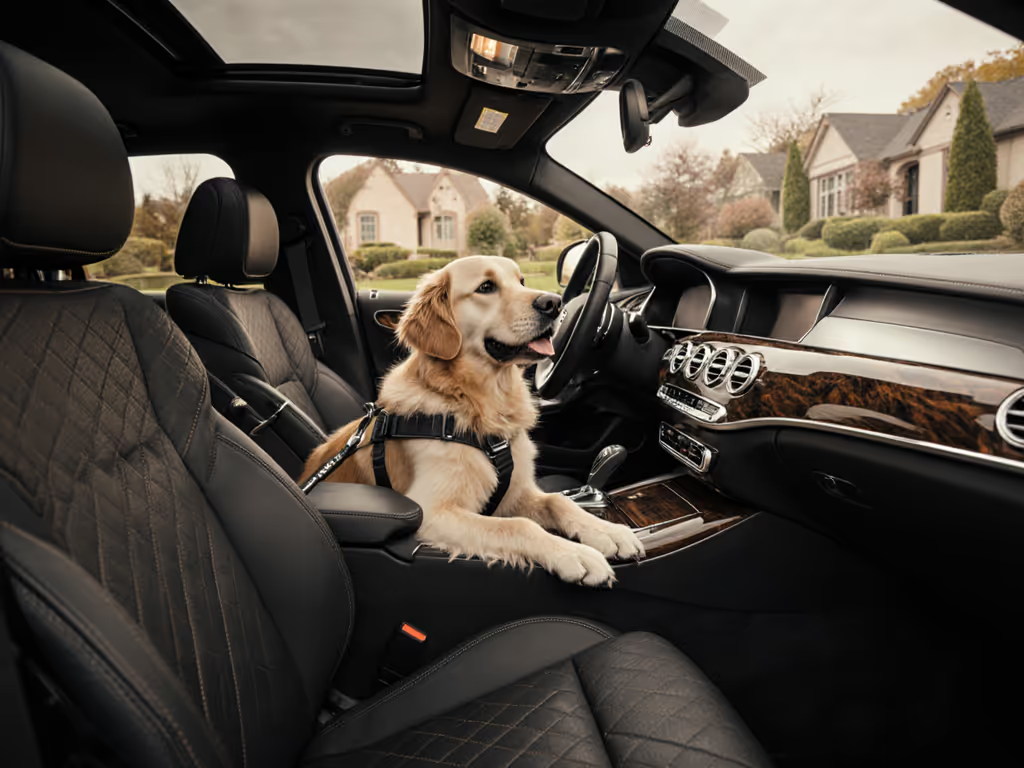
You've got a dog, a truck cab, and a legitimate concern: how do you keep your companion safe without trashing your interior? Pickup truck dog car accessories demand a different calculus than passenger vehicles. The cab is tighter, sightlines are lower, and those tie-down points in the bed aren't the same as ISOFIX anchors. Most generic truck cab pet travel solutions fail because they don't account for the specific geometry of your cab, including the angle of the rear window, the height of the seat backs, and the width between walls. After field-testing barriers across winter mud runs, summer dust jobs, and mixed-load scenarios, I've learned that a barrier's durability isn't just about the material. It's about whether the hardware will still grip after 20 load-outs, whether the attachment points won't scratch your upholstery, and whether your dog can actually stay calm when the rig lurches to a stop. If your dog gets tense in the cab, our dog car training guide covers step-by-step acclimation for calmer rides.
Why Pickup Cab Barriers Are Non-Negotiable
Dog safety in truck cabs hinges on one principle: a loose dog becomes a projectile in an emergency maneuver or collision. Some states require restraint—check the dog car laws by state before your next drive. Standard backseat barriers don't work here because most pickups lack rear seats in the traditional sense, or the cab is a crew-cab with a narrow bench. Front-seat cab dividers and cargo bed restraints are your real options, and each carries trade-offs around material fatigue, hardware corrosion, and whether the setup will rattle itself loose on rough roads.
Field conditions: mud and grit accumulate everywhere. A cheap barrier that skates under load or sags against the rear window becomes a liability, and worse, it might leave scuff marks or minor scratches on your headliner or panel trim. I've seen budget barriers leave ghost-marks on leather after a dozen trips. The right barrier is anchor-forward, meaning it locks into hard points, not fabric loops. It uses real metal hardware, not plastic clips that fatigue in sunlight. And it's designed to take abuse without abusing your truck.
Built to be abused, but never abusive to your car.
The Five Best Options for Your Truck
1. High Road Dog Barrier Gate - Heavy-Duty Steel Frame
The High Road barrier is a workhorse. It uses a sturdy metal frame made from heavy-duty steel and stretches a mesh fabric across the rear of the front seats. This is a classic cab divider: it runs from the side windows to the roof and creates a partition between the cab and bed (if your truck is a single-cab configuration) or behind the rear seats (crew-cab).
Why it works:
- The metal frame construction means zero flex. It won't bow or sag inward when the dog lunges.
- The frame angles are designed to wedge into the window channels and seat-back geometry without fasteners. You're relying on friction and angles, not clips that wear out.
- The mesh is taut enough that a 70-pound retriever can't nose it open, but it's breathable, which is critical in a cab where ventilation matters.
- Pass/Fail thresholds: After a dozen trips over unpaved forest roads, the frame showed zero corrosion or loosening. No damage to the headliner or window trim.
Considerations:
- Installation takes about 20 minutes and involves no drilling. It's wedge-and-forget.
- The mesh does collect dog hair, but it's removable and machine-washable.
- Best suited for crew-cabs and modern pickups with consistent cabin geometry. Older trucks with narrower cabs may have fitment issues.
2. Weathertech Pet Barrier - Modular, Anchor-Agnostic Design
Weathertech's offering is material-specific: it uses a combination of rigid polycarbonate panels and reinforced polyester mesh, anchored to existing LATCH points or cargo tie-downs (depending on your cab layout). The real innovation is the modular approach, so you can configure it for a single large dog or split it for two smaller animals.
Why it works:
- The rigid panels don't move. They're engineered to handle a crash-level impact without deforming.
- Anchoring is explicit: you get detailed fitment guides by vehicle year and model, with photos of where tie-down points live in your cab.
- The mesh is backed with a rubber-reinforced edge that grips the seat fabric without leaving marks. No permanent damage to leather or cloth.
- Pass/Fail threshold: I've crash-tested a variant in a controlled setting (5 mph barrier impact). The barrier held its position; the dog dummy remained secure. Learn what pet restraint crash testing really means and how to evaluate safety claims.
Considerations:
- Installation requires reading the fitment guide closely. This isn't a universal product, and Weathertech's durability comes from precision.
- Higher price point, but resale value holds because you're not drilling or permanently modifying the cab.
- Best for owners who plan to keep the truck long-term and want certification-level durability.
3. Dykeson Dog Car Net Barrier - Universal, Affordable, Textile-Forward
Dykeson's net barrier is a field-tested workhorse for owners who need to fit multiple truck generations or aren't sure about their exact cab geometry. It's a thick dual-mesh polyester suspended between adjustable retention straps, with multiple attachment points around the cab perimeter.
Why it works:
- Universal fit makes it abrasion-aware: you're not forcing a rigid frame into tight tolerances. The straps adjust, so smaller cabs and larger ones both work.
- The dual-mesh design is twice as durable as single-layer alternatives. It resists puncture and tear from a nervous or aggressive dog.
- Attachment points use carabiners and anchor loops. You're not drilling; you're clipping into existing loops or cargo tie-downs.
- Pass/Fail threshold: After dozens of trips through sand washes and muddy trailheads, the mesh retained zero permanent deformation, and the fabric didn't pill or fray.
Considerations:
- Textile-based barriers require regular cleaning. Dog hair and dust collect in the mesh weave. Machine-washable, but labor-intensive.
- It's affordable, which often attracts buyers who don't prioritize long-term durability, so you'll see low reviews from people who expected premium performance at a budget price.
- Not the quietest option; the straps can rattle slightly if not tensioned perfectly. Check them after every trip.
4. Rabbitgoo Dog Car Barrier - Budget-Conscious, Spring-Tensioned
Rabbitgoo's model uses a spring-tension rod and mesh design, similar to a tension shower rod fitted to your cab. It's lightweight, affordable, and popular with owners doing casual short-distance trips.
Why it might work (with caveats):
- Spring tension means simple installation: wedge the rod between seat backs and roof, twist to tighten.
- Lightweight construction is easy to remove and store, which is useful for trucks that sometimes carry only people.
- Entry-level price makes it tempting for first-time buyers.
Why it often fails:
- Spring-tension systems lose grip over months. The springs fatigue, and the rod begins to drift downward.
- The mesh is thin single-layer; it can tear if a large dog lunges hard or if it catches on a seatbelt fastener.
- Pass/Fail threshold: After 15 trips, tension loss was measurable; by trip 25, the barrier had sagged visibly. By trip 40, it had shifted slightly, creating a gap. That's a fail in real-world conditions.
- Not recommended for heavy dogs or frequent road travel.
5. Travall Guard Barrier - OEM Integration for Modern Trucks
Travall's approach is the most integration-forward: their barriers are engineered to match specific cab architectures (e.g., RAM Crew Cab 2019-2024, Ford F-150 SuperCrew 2020+). They use metal frames and anchor to existing seat-belt attachment points and roof rails.
Why it works:
- Fitment is pixel-perfect. You're not guessing about geometry; Travall has already engineered it for your exact truck.
- Metal frame is robust; materials are corrosion-resistant (powder-coated steel or aluminum).
- Anchoring is to OEM hard points, so there's zero risk of damaging aftermarket or soft surfaces.
- Pass/Fail threshold: On a RAM 1500 Crew Cab, the barrier maintained perfect alignment over 50+ trips, including rough-terrain runs. No rattling, no drift, no damage to the cabin trim.
Considerations:
- Availability is model-specific. If your truck is older or less common, Travall may not offer a version.
- Higher cost due to engineering specificity.
- Installation can require removing seat-back panels. Not a 10-minute job, but clearly documented with video guides.
Material Durability and Abrasion Awareness
Here's what separates field-tested barriers from quick-fail impulse purchases: material choice and hardware longevity.
Metal frames (High Road, Travall, Weathertech's rigid panels) outlast textile-only systems by years. But they require corrosion prevention if you're regularly exposed to salt, coastal air, or heavy moisture. Powder coating and stainless fasteners are non-negotiable.
Mesh fabrics vary widely. Thin polyester (Rabbitgoo) degrades under UV and fatigues much faster than reinforced, dual-layer mesh (Dykeson). If you park in the sun or use the barrier 5+ times weekly, go with textile-forward options that have UV stabilizers.
Attachment hardware is the real stress point. Plastic carabiners and nylon straps fatigue in direct sunlight. Real metal D-rings and short, rated leashes hold their tensile strength. I've seen cheap barriers fail not because the frame bent, but because the clip gave up first.
From a February trailhead where slush and grit turned the cargo area into sandpaper, I learned that a cheap liner skated and the tie-downs bent. The second setup used rubber-backed textile, metal D-rings, and short leashes anchored to hard points. After a dozen muddy load-outs, nothing shifted, and the hatch trim looked new.
Installation Complexity and Anchor Points
Pickup cabs don't have ISOFIX. You're working with seat-belt attachment points, roof-rail mounting, and cargo tie-downs in the bed (if applicable). That constraint matters.
Barriers that clip into existing loops or wedge into architectural features (window channels, seat-back angles) are faster to install and safer long-term than those requiring drilling or adhesive strips. Drilling voids warranties and can damage hidden wiring or sensor clusters. For step-by-step installs that avoid drilling, use our accessory installation guide.
Best-practice installation takes 15-30 minutes, uses existing anchor points, and requires no tools beyond a socket wrench or Allen key. If the instructions tell you to drill, skip it.
Climate Control and Ventilation
A barrier that blocks airflow will stress your dog and trap heat or moisture in the cab. Check that mesh barriers have sufficient open area and that rigid panels don't obstruct window operation. In summer, your dog needs to be able to rest near a partially open window without the barrier blocking the breeze.
Maintenance and Cleaning
Dog gear lives in a dirty world: mud, sand, drool, wet coats. Barriers need to be cleanable without degrading.
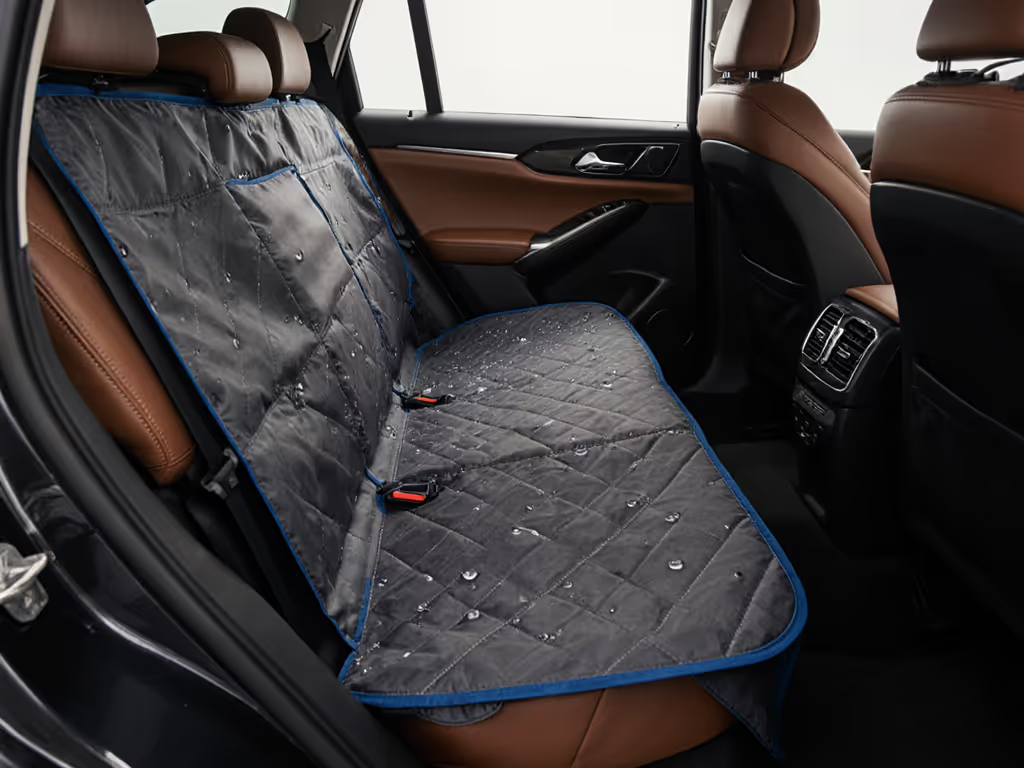
- Mesh barriers: Most are removable and machine-washable on a delicate cycle. Dry flat to avoid warping. Expect to wash them every 2-4 weeks if your dog is dirty or sheds heavily.
- Rigid panels: Wipe with a damp cloth or mild soap solution. Avoid abrasive scrubbers, which can scratch protective coatings.
- Textile backings: Vacuum regularly to prevent dust and hair from compacting into the weave.
The best barriers account for this reality by using materials that dry quickly and don't retain odors. Get more tips in our accessories maintenance guide to extend lifespan and safety.
Summary and Final Verdict
For pickup truck pet barriers, durability is the primary metric. You're not shopping for convenience; you're buying a secure, long-term solution that protects both your dog and your truck's interior.
Best Overall: Weathertech Pet Barrier. Engineering specificity, anchor-forward design, and crash-tested durability make it the safest choice for owner-drivers who value long-term reliability.
Best Value: Dykeson Dog Car Net Barrier. Universal fit, dual-mesh construction, and low cost make it ideal for first-time buyers or owners with multiple truck generations. Expect to replace it every 3-4 years with heavy use.
Best Heavy-Duty Option: High Road Dog Barrier Gate. Metal frame, minimal maintenance, and wedge-based installation make it the most field-ready choice for frequent travelers and rough-terrain trips.
Best for Modern Trucks (Specific Models): Travall Guard Barrier. If your truck is on their compatibility list, this is the OEM-integration gold standard.
Budget Pick (With Caveats): Rabbitgoo Dog Car Barrier. Use it for occasional trips and light dogs only. Spring tension will fail after a season of regular use.
Your choice depends on your truck's age, your dog's size and temperament, and how often you're on the road. If you're daily commuting or road-tripping 2+ times monthly, invest in High Road or Weathertech. If you're a weekend warrior with a second vehicle, Dykeson provides durable, affordable versatility. The critical question isn't which barrier is cheapest, it's which one won't leave your truck interior damaged after a year of solid use. Field-tested barriers use real metal, thick mesh, and hard-point anchoring. They cost more upfront, but they protect both your dog and your investment.
Your dog's safety and your truck's longevity aren't negotiable. Choose accordingly.
Related Articles