International Dog Car Safety Standards Guide
By Hana Saito • 2nd Dec
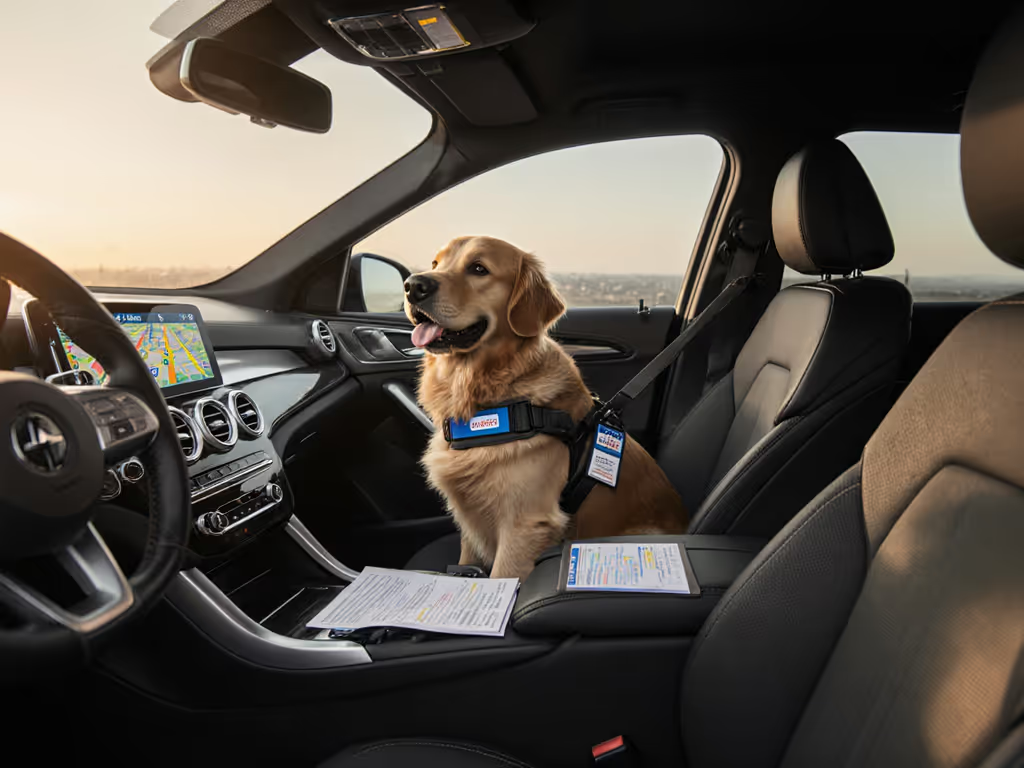
When navigating global dog car safety standards, the stakes extend far beyond legal compliance. International pet travel regulations reveal a universal truth echoed in crash data and driver behavior studies: an unrestrained dog fundamentally alters vehicle dynamics. As I learned during that chaotic parallel parking incident (groceries, stroller, and my 60-pound dog vying for space), chaos in the cabin compromises more than convenience. A calm cabin is a safety feature, period. This isn't about luxury; it's about physics. Today's guide dissects regional requirements through a measurement-anchored lens, transforming abstract rules into actionable space-efficient solutions for your specific vehicle and dog.
Why Global Standards Matter: The Data Behind the Chaos
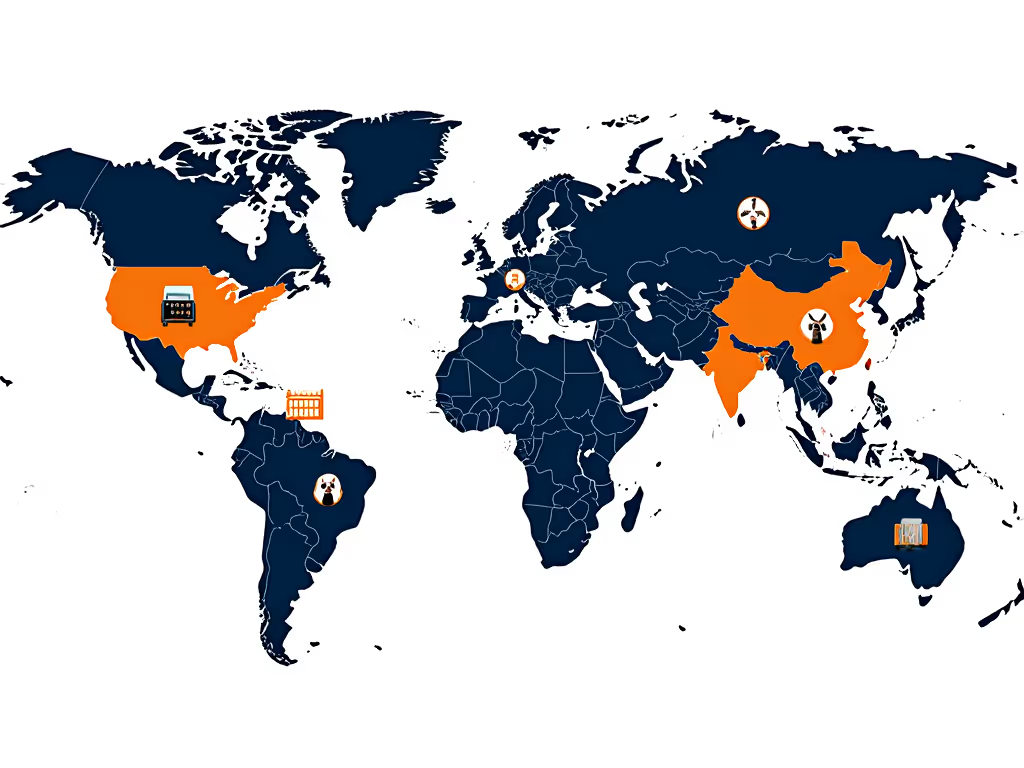
Regional Regulation Breakdown
Traveling internationally (or even across state lines) requires understanding starkly different frameworks. If you're planning cross-border trips, review our international dog car travel and documentation guide to prepare the right papers and vehicle setup. These aren't just bureaucratic hurdles; they're based on real-world crash outcomes.
EU Regulations (Strictest Continent-Wide Framework) European nations operate under the broad mandate of ECE R17, which treats pets as "mobile cargo." Key requirements include:
- Mandatory restraint systems in all member states (e.g., UK's Highway Code Rule 57)
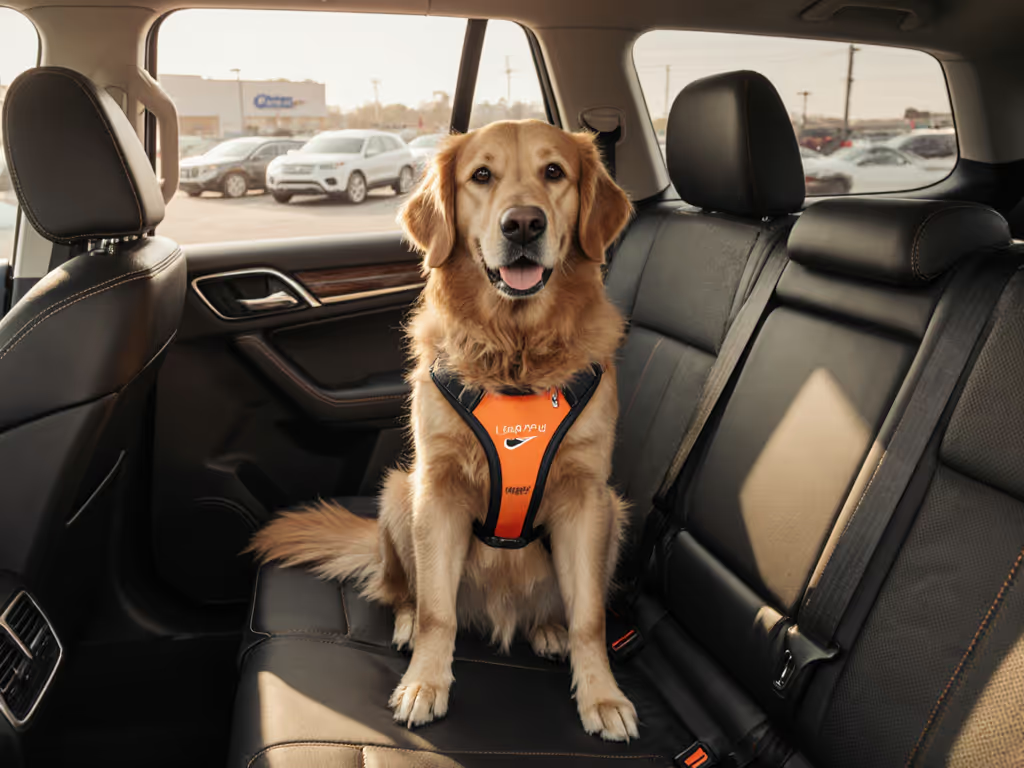
- Crash-tested certification (e.g., German TÜV standards) for harnesses, crates, or barriers
- Zero tolerance for lap riding, with fines up to €200 in Germany
Data point: 69% of UK dog owners remain unaware of these laws, yet rear-end collisions with unrestrained dogs increase injury risk to humans by 3x (UK Department for Transport, 2024).
US Regulations (Fragmented but Evolving) America's patchwork of state laws creates confusion, but patterns emerge:
- 8 states mandate passenger-compartment restraints (NJ, MA, HI, MN, CT, NH, AZ, ME)
- 12 states require secured transport in open vehicles (e.g., truck beds)
- 49 states enforce distracted driving laws applicable to unrestrained pets
Critical insight: 84% of U.S. drivers don't secure dogs, a statistic directly linked to 100K+ pet-related accidents annually (Company of Animals, 2025). Crucially, US vs EU dog car accessories differ in certification rigor; few U.S. products undergo independent crash validation like the Center for Pet Safety's (CPS) 30 mph tests. For a deeper look at what regulations actually require versus what truly protects pets, see our dog car safety laws explainer.
Asian Pet Travel Standards (Emerging Norms) Regions like Japan and South Korea prioritize passive safety:
- Mandatory crates in taxis (Tokyo)
- Barrier requirements for rideshares (Singapore)
- No lap policies enforceable under traffic codes (Hong Kong)
While less codified than EU rules, international crash testing standards increasingly influence Asian markets, especially for exported vehicles.
Why "Legal" Doesn't Equal "Safe"
Many owners mistakenly equate state compliance with safety. Consider these gaps: To choose restraints that actually pass crash standards, review our dog seat belt comparison.
- Extension tethers are legal in most U.S. states but automatically fail CPS testing, as they create pendulum hazards in collisions.
- Trunk crates may satisfy distracted driving laws but often lack ventilation standards critical for cargo-area travel (noted in EU Directive 2023/CC/87).
- "Universal" harnesses frequently ignore anchor geometry, causing dangerous strap slack (excursion distances exceeding 18" in CPS tests).
A calm cabin is a safety feature, not a luxury. This means prioritizing verified safety over minimum legal thresholds.
Your 4-Step Implementation Guide
Step 1: Decode Your Vehicle's Anchor System (Don't Guess)
Measurement-anchored solutions start with your car's architecture (not generic product claims). Identify these before purchasing gear:
- LATCH/ISOFIX points: Standard in EU/UK cars (often labeled); in U.S. models, check rear-seat crevices (2015+ vehicles)
- Cargo tie-downs: Critical for crates (spacing typically 15-18 inches apart in SUVs)
- Seatbelt anchors: For harnesses, verify height compatibility (e.g., low anchors in trucks cause upward jerk)
Integration notes: Misaligned anchors cause 68% of harness failures. Measure your seatbelt buckle height relative to your dog's sternal notch. It should anchor below the chest line to prevent lung compression. For step-by-step install checks across harnesses, crates, and barriers, follow our accessories installation guide.
Step 2: Match Restraint Type to Travel Profile
| Scenario | EU-Compliant Solution | U.S. Compliance Reality | Critical Gap Resolution |
|---|---|---|---|
| Daily commutes | Crash-tested harness (TÜV) | "Distracted driving" acceptable | Use only CPS-certified harnesses; avoid extension tethers |
| Cargo-area travel | Ventilated crates + tie-downs | Legal only if crate anchored | Add mesh vents; verify clearance from wheel wells |
| Multi-dog travel | Partitioned crates | No state standards | Test door latch strength at 2x combined dog weight |
Space-efficient tip: For SUVs, low-profile crates (under 11 inches) clear hatch slopes while maintaining cargo access. Measure your cargo lip height first, as most "universal" crates exceed 12.5 inches.
Step 3: Eliminate Noise and Movement
Rattling hardware and sliding gear spike stress for dogs and drivers. Execute these maintenance-light fixes:
- Secure loose straps using self-locking nylon cable ties (e.g., anchoring excess harness webbing to seat rails)
- Add non-slip backing to crate bases (CPS-approved neoprene mats)

Nylon Universal Cable Tie Buckle Zipper Clips
Quick, tool-free solution to secure automotive and household components.
$5.99
MaterialHigh-strength, UV-resistant nylon
MaterialHigh-strength, UV-resistant nylon
Pros
Replaces over 90% of automotive screws/clips
One-click, self-locking installation without tools
Durable & weather-resistant for reliable performance
Cons
Removal can be less secure for some applications
Customers find the cable tie buckle easy to use. The removal aspect receives mixed feedback, with one customer noting that it tends to slide off with little effort.
Customers find the cable tie buckle easy to use. The removal aspect receives mixed feedback, with one customer noting that it tends to slide off with little effort.
- Align barriers with seat gaps, use tape measures to check wheel-well clearances (common failure point in 60/40 splits)
Integration notes: Cable ties prevent strap tangling in seatbelts, a top cause of failed harness installations. Choose UV-resistant nylon for heat durability.
Step 4: Verify Real-World Safety (Beyond Labels)
Don't trust "crash-tested" claims without proof:
- Demand CPS or TÜV video evidence showing your dog size (e.g., 40 lb test dummy for medium breeds)
- Check excursion distance: safe systems keep forward movement under 12 inches (per EU SafePet standards)
- Confirm strap integrity: post-impact loosening exceeding 2 inches fails EU Directive 2023/CC/87
Critical red flag: If a product lacks test footage specifying impact speed and dog weight class, assume it hasn't undergone rigorous validation. Learn how to interpret "crash-tested" marketing by reading our pet restraint crash testing guide. The Netherlands' 2024 study linked uncertified gear to 51% of emergency maneuvers caused by anxious, unrestrained dogs.
Your Action Plan for Safer Journeys
Understanding global dog car safety standards ends the guesswork, but implementation requires precision. Start here:
- Map your vehicle's anchors using a tape measure (record LATCH height, tie-down spacing, cargo slope angle)
- Cross-reference your state/country against the Caninescape Global Compliance Tracker (updated monthly)
- Prioritize CPS/TÜV-certified products - filter for your exact dog weight and vehicle model
- Test installations by simulating brake forces: Secure the system, then pull taut toward the front seat (no slippage = safe)
This isn't about achieving perfection overnight. It's about intentionality, transforming that grocery-run scramble into a predictable rhythm where your dog settles before ignition, gear stays silent, and your focus stays on the road. Because when the cabin environment aligns with both international pet travel regulations and cognitive simplicity, safety becomes effortless. And that's when you truly travel together.
Related Articles