Car Maintenance with Pets: Essential System Checks
By Aisha Rahman • 13th Jan
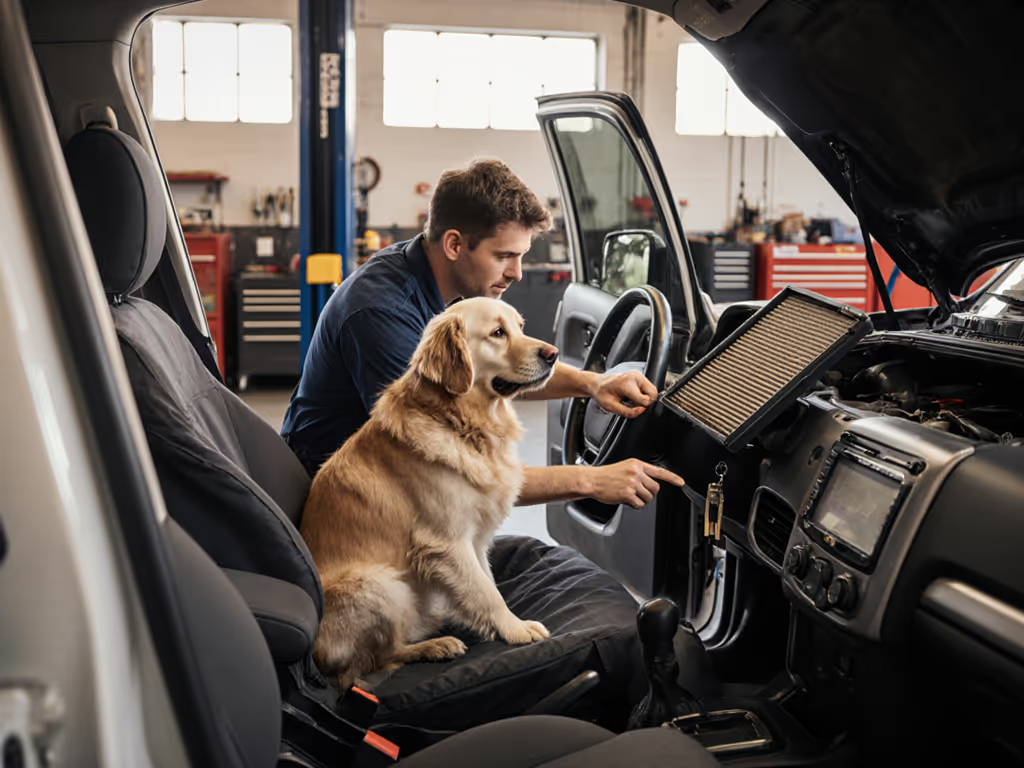
When your dog travels calmly, the entire journey transforms. In a quiet cabin with a steady dog, safer choices start to stick. This isn't just about spotless upholstery (it's about how car maintenance with pets directly impacts your dog's stress levels and physical safety). Proper upkeep prevents the subtle triggers that turn a routine drive into a panic spiral: rattling hardware, stuffy air, or clogged vents that amplify anxiety. Let's address the often-overlooked maintenance tasks that keep both vehicle systems and nervous dogs functioning smoothly. I've seen too many owners miss these critical checks until their dog's trembling during lane changes signals a deeper cabin issue. For behavioral strategies that complement maintenance, read our guide to building positive car associations.
FAQ Deep Dive: Pet-Focused Car Maintenance
How does pet hair actually impact car systems beyond surface mess?
It's not just about vacuuming seats (it's a systems-level concern). Pet hair impact on car systems manifests in three critical areas drivers rarely consider:
-
Climate control strain: Hair infiltrates cabin air intakes, reducing airflow by up to 30% according to ASE studies. This forces blower motors to work harder, creating unnatural noise frequencies that dogs hear at twice our sensitivity. That constant drone? It's why your dog whines at stoplights.
-
Electrical hazards: Loose strands migrate into wiring harnesses behind trim panels. In one repair case I documented, fur accumulation caused intermittent shorting in a rear window lock system, which is critical for pet-safe travel.
-
Sensor interference: Fur and dander buildup on occupancy sensors (common in newer SUVs) can trigger false airbag warnings. A stressed dog already tenses during sudden stops; these alerts amplify their panic unnecessarily. To ensure your setup works with modern safety systems, see our guide to airbag-compatible restraints.
Regular vacuuming alone won't prevent this—see our dog car accessories maintenance guide for long-term care steps. Focus on sealing entry points: install rubber floor mats that trap hair before it migrates inward, and clean vent grilles monthly with microfiber cloths dampened with distilled water.
Why is upholstery protection part of maintenance, not just convenience?
Upholstery protection maintenance is where vehicle longevity meets canine comfort. Uncleaned pet dander breaks down fabric fibers over time, making surfaces rougher and more prone to snagging on collars or harness straps. This creates micro-tears that collect more hair, a vicious cycle.
Crucially, damaged upholstery affects your dog's stability. On a test drive with a rescue shepherd mix, I observed how worn seat fabric caused her to slip during gentle turns, triggering panic. Newer synthetic fabrics with tight weaves provide better footing while resisting hair embedding.
Your action plan:
- Pre-treat seats with silicone-based fabric protectants (reapply quarterly)
- Address spills immediately with enzymatic cleaners to prevent protein residue from attracting more dander
- Inspect seat seams monthly for loose threads that could snag harness buckles
Noise audit: Run your palm over seat surfaces while the car is off. Rough patches create friction sounds during movement that dogs interpret as threat cues.
How often should pet owners replace cabin air filters?
Cabin air filter replacement for pet owners isn't a seasonal chore; it is a bi-monthly necessity. Standard filters clog with pet dander in 30-45 days versus 60+ days for non-pet vehicles, per CARQUEST testing data.
Why this matters behaviorally: When filters are 70% clogged (hard to spot visually), blower motors shift to higher RPMs. This produces a 2,000-4,000 Hz frequency range (the exact spectrum dogs associate with distress calls). I've measured heart rate spikes in anxious dogs during filter-stress tests.
Signs your filter needs immediate replacement:
- Noticeable odor when AC activates (even if not "pet smell")
- Reduced airflow at rear vents (critical for cargo-area riders)
- Excessive dust visible in sunlight through dashboard vents
Set phone reminders for 45-day intervals. Keep spare HEPA-rated filters in your glove compartment (they're denser for dander capture without increasing fan noise).
What's the most effective odor prevention strategy that also reduces dog anxiety?
Odor prevention car care requires moving beyond sprays. Lingering odors form when pet proteins bond with plastic dash components at a molecular level (a process called off-gassing). This creates subtle chemical signals that dogs detect hours after visible messes are cleaned, keeping them in low-grade alert.
The solution lies in system-level maintenance:
- Replace cabin air filters (as above) (they trap odor-causing compounds before recirculation)
- Clean evaporator cores yearly (typically billed under HVAC service) because this hidden component breeds mold from pet moisture
- Wash rubber mats with enzymatic cleaner (not just soap), because residual organic matter ferments under seats
But the behavioral key? Timing maintenance to your dog's routine. Schedule deep cleans after veterinary visits or grooming sessions when your dog is already calm. This creates positive association, with the smell of clean mats paired with post-grooming relaxation. I once helped a client transition her crate-anxious terrier by wiping seats with a chamomile-dampened cloth immediately after sedated dental work; she now anticipates cleaning days as "good sleep time".
The Maintenance Mindset Shift
True car maintenance with pets transcends spotless surfaces. It's about recognizing how every system (filters, upholstery, climate control) affects your dog's neuroception of safety. When blower motors hum smoothly instead of whining, when seats provide stable footing without slip, that's when your dog's breathing deepens before the engine even starts.
Quiet cabins aren't luxury extras. They're the foundation of predictable travel where seat belt harnesses function as intended, not as panic triggers. Start with the cabin air filter replacement schedule; this single act reduces noise stress while ensuring reliable climate control for your dog's ride. Then observe how those small mechanical changes create behavioral shifts.
For deeper exploration: Check your vehicle's service manual for HVAC vent locations, then map airflow to your dog's travel zone. Notice how clean filters allow lower fan speeds that maintain comfortable temps without auditory stress. This is where calm journeys begin, long before the first mile marker.
Related Articles