Crash-Tested Dog Restraints: Emergency Braking Data
By Maya Park • 28th Apr
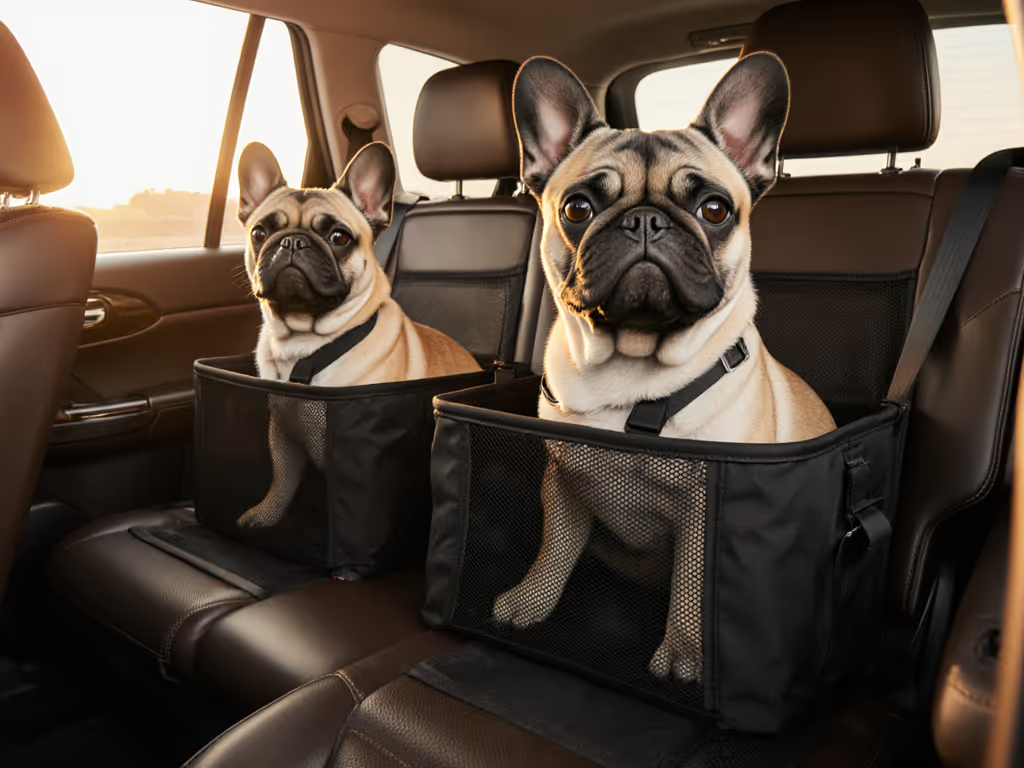
When your car brakes hard, physics doesn't negotiate. A crash tested car seat for dogs built to real safety standards (tested, measured, and verified) can mean the difference between a secure passenger and a projectile. Yet most dog owners can't distinguish between marketing claims and actual crash data. For a standards-first overview, see our crash testing guide covering FMVSS 213 vs CPS and how to interpret claims. This deep dive breaks down emergency braking pet safety, explains what crash-test numbers really tell you, and shows you how to compare the systems that matter.
What Does "Crash Tested" Actually Mean?
The Standards and the Myths
Not all crash testing is equal. A harness labeled "crash tested" might be evaluated under one of several different protocols, and the differences matter enormously.
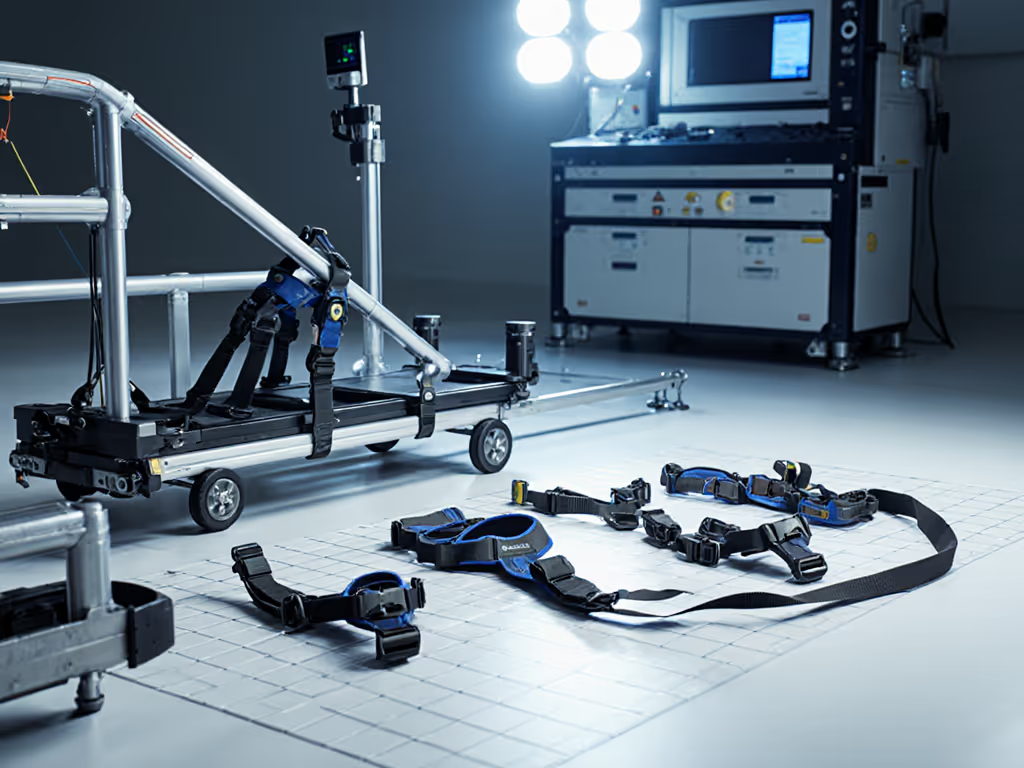
The majority of dog restraints claiming crash testing have been evaluated against Federal Motor Vehicle Safety Standard 213 (FMVSS 213), which was designed for child restraint systems, not pets. Under FMVSS 213, a harness or seat is tested using a sled apparatus (a platform that simulates frontal impact by decelerating rapidly). The system must meet two core criteria: the dog stays within acceptable excursion limits (how far forward it travels), and the hardware and webbing don't fail catastrophically.[1]
Kurgo's Enhanced Strength Tru-Fit Smart Harness, for example, passed FMVSS 213 testing with excursion limits of ≤32 inches for dogs up to 50 pounds and ≤36 inches for dogs 51 to 75 pounds, and the hardware and webbing remained intact post-impact.[1]
But here's the critical caveat: FMVSS 213 was not written for animals. Its excursion thresholds and injury-risk models are based on human biomechanics. This gap led to a newer, more rigorous standard.
The Center for Pet Safety (CPS) developed its own Safety Harness Crash Test Protocol, specifically engineered for dogs. This protocol applies more conservative excursion limits and measures force distribution differently, aiming to account for canine anatomy and injury thresholds.[4] A product certified by CPS typically exceeds FMVSS 213 requirements and represents the current gold standard for verifiable safety.
Model-year caveats: CPS certification lists have grown, but older products tested to FMVSS 213 alone may not meet CPS thresholds. Check the certification year and which protocol was used.
What Research Actually Showed
In 2018, BarkBelt published results from custom crash-test dummies designed specifically to measure canine impact forces. Rather than relying on child restraint thresholds, they ran real side-by-side sled tests and collected actual impact data.[3] The key finding: every system has trade-offs. Some reduce forward momentum but concentrate force. Some distribute force but allow greater movement. None were perfect, but for the first time, dog owners could see comparative data instead of marketing claims alone.[3]
That evidence-first approach (measuring, testing, comparing) is the only honest way to evaluate restraint systems. Watch a dealership lot demo where two harnesses labeled "universal" both pop free under hand pressure, then watch a properly anchored setup stay rock solid during a real sudden stop on wet pavement. The math is there, and so is the peace of mind.
How Do Emergency Stops Load a Restraint?
The Physics of Sudden Braking
When your car decelerates rapidly (whether it's an emergency brake, a collision, or just hard braking in traffic), your dog experiences forward inertia. Newton's first law doesn't care that your dog is a family member: an object in motion stays in motion. If the harness, seat, or crate can't redirect that force safely, the dog launches forward, and the restraint system is tested.
A crash-test sled simulates this by accelerating a weighted platform to a target speed, then stopping it abruptly. The restraint system must absorb or redirect the resulting force without exceeding safe excursion limits or breaking. The force measurement is critical: a harness that keeps a dog in place but concentrates all load on a narrow strap can injure the spine or ribs. One that distributes force across a broader contact area is gentler, if it stays anchored.
This is why anchor strength and geometry matter profoundly. A harness with perfect webbing can fail if it's clipped to a weak cargo anchor or tethered to a seat-belt path that was never designed to handle sudden deceleration loads. I audit vehicle anchor points and strap geometry before recommending anything, because a good harness in a weak anchor is worse than no harness at all. It gives false confidence. Learn how airbags, seat belts, and LATCH interact with pet gear in our airbag-compatible restraint guide.
Excursion Limits Explained
Excursion is how far forward the dog travels during impact. In FMVSS 213 testing, acceptable excursion is ≤32 to 36 inches depending on dog weight.[1] In CPS testing, limits are more conservative. Why? Because more distance means more impact energy must be absorbed by the dog's body. A shorter excursion means the harness stops the dog sooner, reducing injury risk.
However, excursion alone doesn't tell the whole story. A harness that limits excursion to 20 inches by pinching a dog's chest may prevent sliding but concentrate dangerous force. This is why CPS testing also measures strap movement (does the harness loosen during impact?), structural integrity (does webbing tear?), and force distribution (how is load spread?).[4]
Comparing Real Crash-Test Results
FMVSS 213 vs. CPS: The Gap
Ruffwear's Load Up harness was tested under FMVSS 213 conditions at MGA Research Corporation. In dynamic sled tests, the dog mannequin remained upright and on the seat across all three trials.[2] That sounds excellent, and it is, for an FMVSS 213 standard.
But Ruffwear was transparent about an important caveat: the Load Up harness has not been tested against CPS's protocol, and the company estimates it would not meet CPS excursion limits based on the seatbelt attachment location.[2] Ruffwear acknowledged that achieving CPS certification would likely require attaching the belt higher on the dog's back, but they chose their current attachment point because they believed it offered the optimal balance of safety and comfort (allowing the dog to lie down without restriction).[2]
This reveals a real trade-off: FMVSS 213 allows more excursion than CPS. A product certified under one standard may not pass the other. As a buyer, you need to know which protocol matters to you.
Products That Clear CPS
The Center for Pet Safety publishes a list of certified products.[5] Those on it have undergone rigorous testing and transparency audits. Cabela's GunDog crate, for example, earned a five-star CPS rating by meeting all major parameters: doors remained locked, sliding was minimal, straps did not break, and the crate sustained no fractures.[4]
Note the distinction: a five-star crate differs from a harness. Crates physically contain the dog; harnesses restrain via attachment points and force distribution. Both are valid approaches, but they load the vehicle differently and suit different trip types and vehicle configurations. If you’re leaning harness, compare top contenders in our seat belt harness comparison.
Red Flags in Crash-Test Claims
Extension Tethers and Automatic Disqualification
One finding from real-world research stands out: extension tethers are extraordinarily dangerous.[4] A tether that stretches or extends during impact allows excessive excursion and can cause sudden jerking forces that harm the spine. So serious is this risk that CPS automatically disqualifies any product that includes an extension tether component, even if other aspects are sound.[4]
If a product you're considering includes a spring-loaded or elastic tether, it is not CPS-certified and likely won't perform well in a real emergency brake.
Generic "Crash Tested" Claims Without Certification
Manufacturers can state "crash tested" without specifying the protocol, the test facility, or the results. Always dig deeper:
- Which standard? FMVSS 213, CPS, or an in-house test?
- Who tested it? Independent third-party labs (MGA Research, university facilities) carry more weight than manufacturer-run tests.
- What were the actual results? Excursion distance, force data, pass/fail specifics.
- Is there a certification badge? CPS publishes a certified-products list. If it's not there, it hasn't met that standard.
Most pet restraints labeled "crash tested" rely on outdated standards that don't measure real injury risk.[3] Marketing-driven claims sound reassuring but lack the specificity that buyers who care about actual data need.
Choosing the Right Restraint for Emergency Braking
Harnesses vs. Crates vs. Barriers: Trade-offs
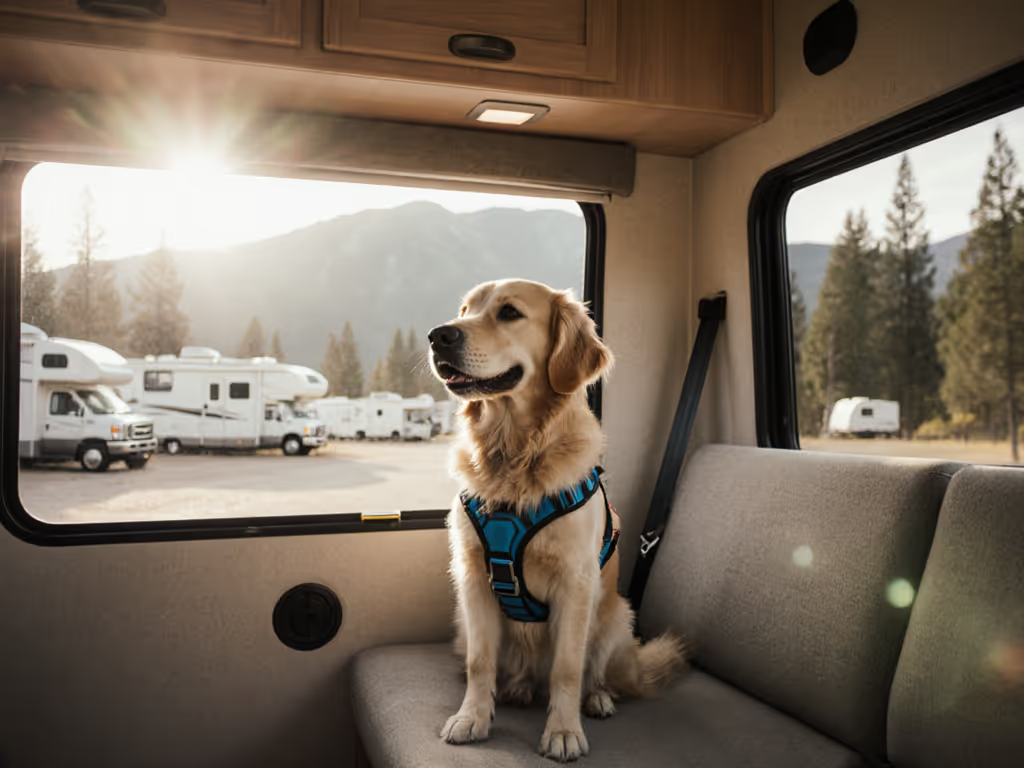
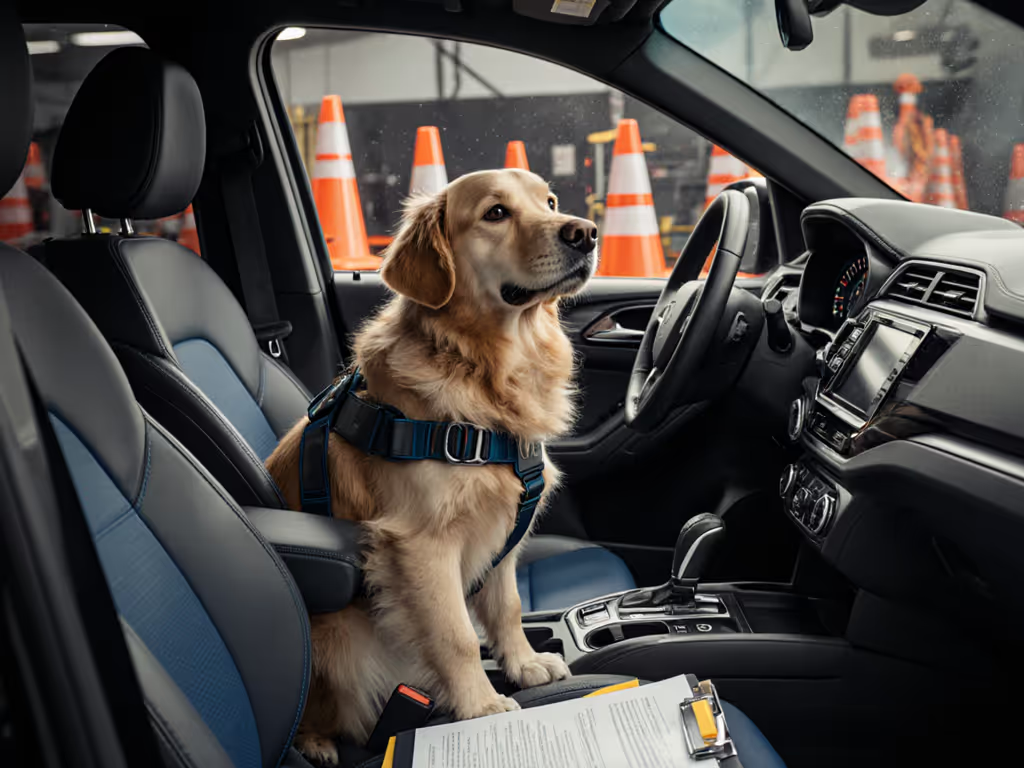
Harnesses distribute force via webbing and attachment points. A well-designed harness allows the dog to sit, stand, and lie down, making it suitable for long trips. Testing focuses on excursion and strap integrity.[1][2] Best for: dogs that need comfort over multiple hours; vehicles with LATCH or accessible cargo anchors.
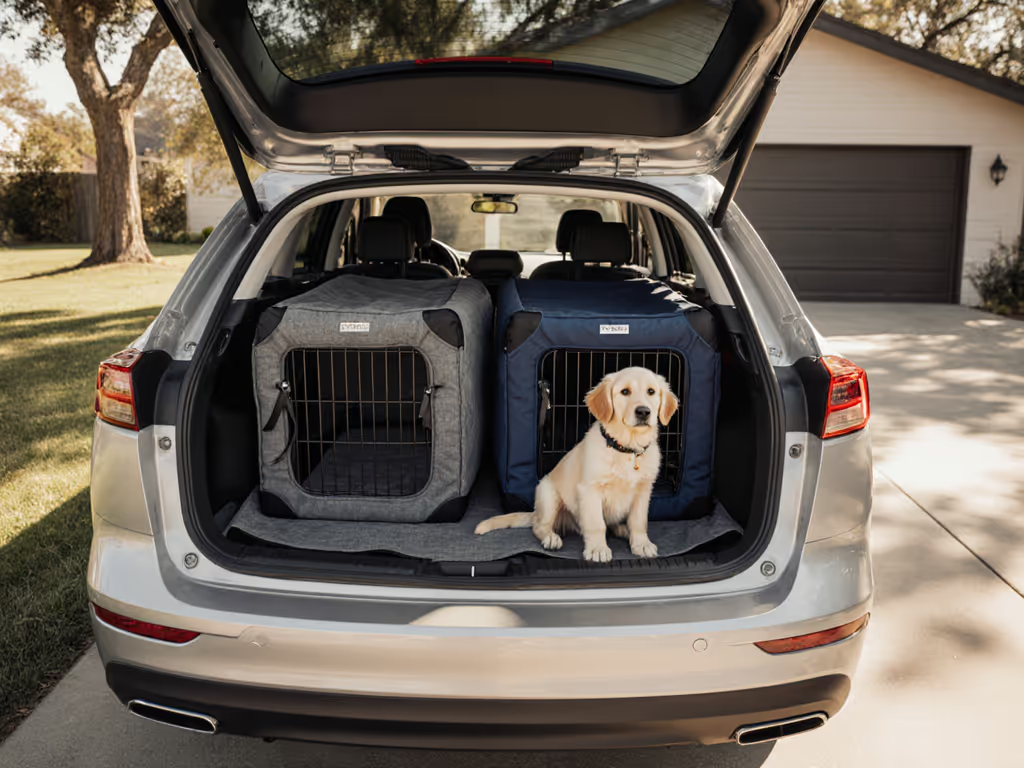
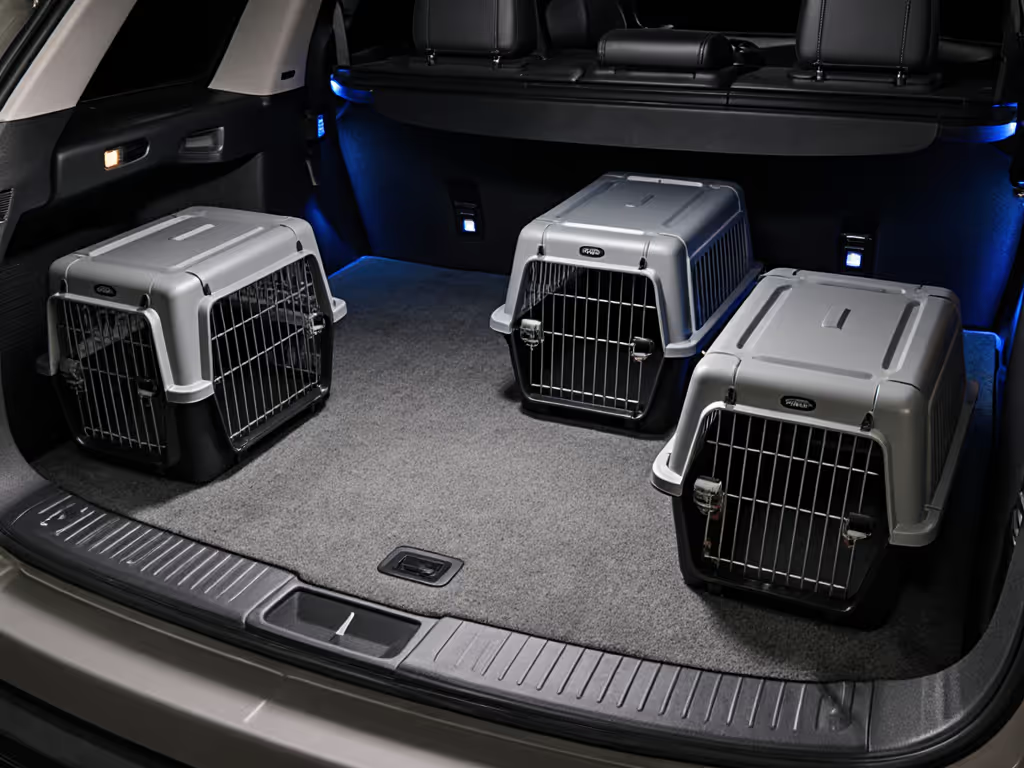
Crates physically contain the dog, limiting movement. They excel at preventing sliding and ejection but reduce visibility and airflow. CPS testing of crates emphasizes door lock integrity and impact resistance.[4] Best for: high-energy dogs; short trips; situations where restraint is secondary to containment.
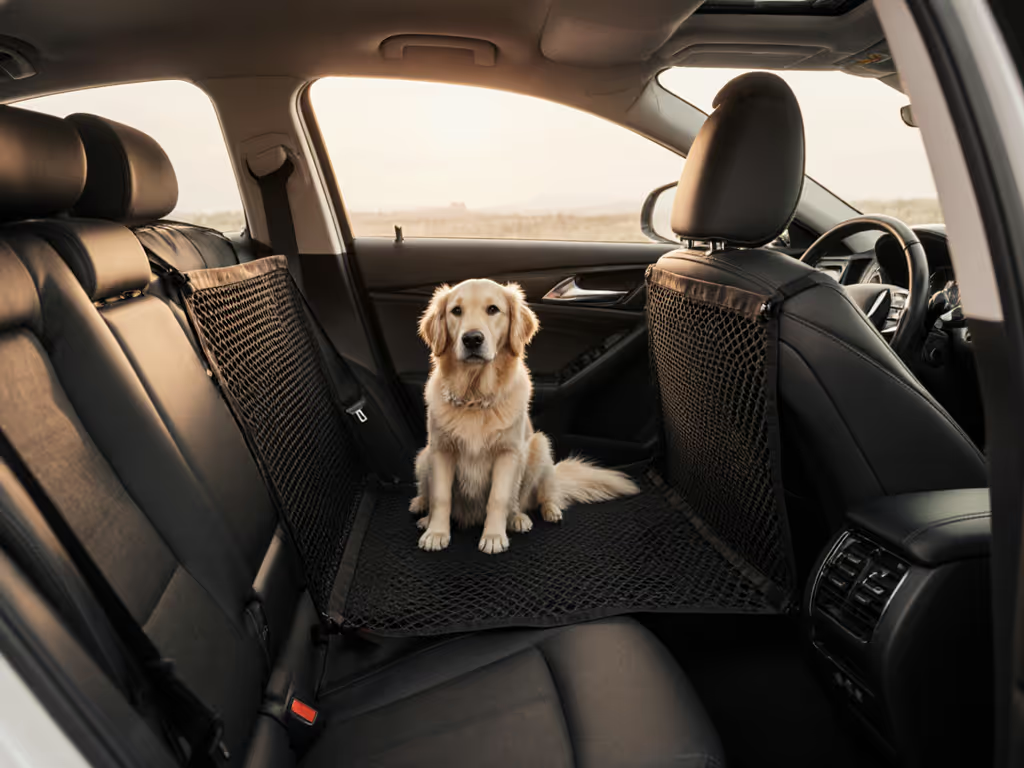
Barriers separate the cargo area from the cabin, preventing forward launch. They work well for SUVs and wagons with large cargo bays but don't physically restrain the dog if the vehicle rolls or impacts sideways. Best for: stationary cargo-area travel; vehicles where the dog's size fills the space.
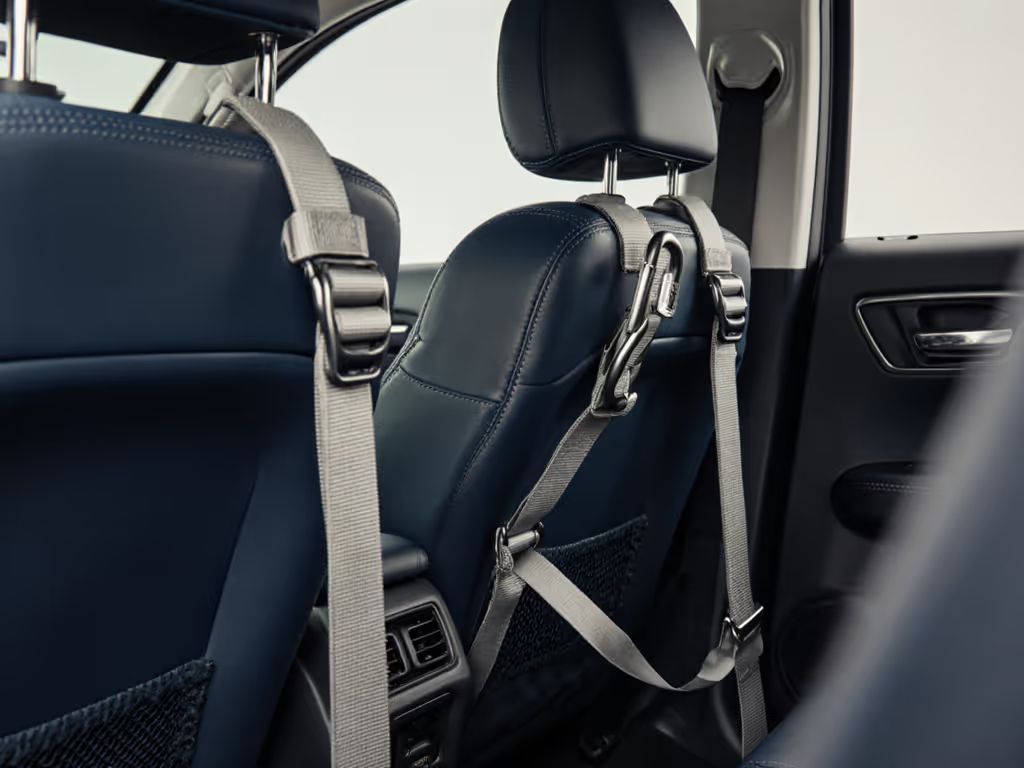
Measure twice, anchor once, and your dog rides calmer: a harness installed to a weak anchor or a crate placed on an unstable platform can fail. System integrity matters as much as device design. For install best practices that prevent common failure modes, follow our field-tested installation guide.
Model-Year Specificity
Vehicle anchor points, seat geometry, and seatbelt paths vary by model year. A LATCH anchor in a 2022 SUV may be positioned differently than in a 2025 model. A harness tether clipped to a rear-seat belt in a sedan with a flat rear seat behaves differently than in a crossover with a sloped, split second row.
Generic "universal fit" claims gloss over these details. Responsible manufacturers provide fit guides keyed to specific vehicle makes, model years, and trim levels. Ignore that guidance at your own risk. For vehicle-matched setups, see our SUV vs sedan barrier fit guide.
What to Verify Before Purchase
- Anchor compatibility: Confirm that your vehicle has accessible LATCH, cargo tie-downs, or seat-belt paths suitable for the restraint's attachment method.
- Test protocol and results: If "crash tested" appears on marketing, request the specific protocol, test facility, and performance data.
- Third-party certification: Check if the product is CPS-certified or tested by an independent lab.
- Strap and hardware durability: Read reviews from long-term users about wear, noise, and loosening over time.
- Fit for your dog's size and behavior: A harness rated for 25–50 pounds may concentrate force unsafely on a 30-pound dog if the dog is narrow-chested. Try before buying, or ensure a return policy.
- Ventilation and comfort: For long trips, verify that the restraint doesn't restrict breathing or create heat buildup.
Moving Forward: Questions to Ask
As you evaluate restraint systems for your vehicle and dog, consider these:
- Has this product been tested by an independent lab, and under which standard?
- Does the manufacturer provide excursion and force data, or only pass/fail?
- Is it CPS-certified, and if not, why not?
- Does the product include an extension tether? (If yes, skip it.)
- Will this system fit my specific vehicle model year, and are there fit guides available?
- How do I anchor this safely in my car, given my vehicle's seat and cargo geometry?
- What happens during a sudden stop or hard braking with my dog's weight and size?
- Does the manufacturer offer a fit guarantee or return policy?
The landscape of crash-tested dog restraints continues to evolve. New test protocols emerge, more products seek certification, and real-world data accumulates. Staying informed (measuring anchor points, reading crash-test specifics, and road-testing installs yourself) is how you build genuine confidence in your setup.
Your dog deserves restraint engineered to real safety standards, installed correctly, and verified through your own due diligence. The data is available. The standards exist. The only missing ingredient is the care you take to find the right system before your dog needs it most.
Related Articles